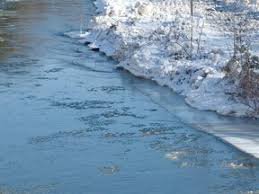
Frazil Ice: Unveiling the Mystery of Arctic’s First Ice
As the Arctic plunges into the colder months, a unique and often overlooked form of sea ice begins to appear: frazil ice. Unlike the solid, familiar sheets of ice we often picture, frazil ice is a collection of delicate, randomly oriented ice crystals, resembling a slushy, icy felt. This seemingly innocuous phenomenon plays a crucial role in Arctic ecosystems, impacts shipping routes, and offers valuable insights into the broader effects of climate change.
What Exactly *Is* Frazil Ice?
Frazil ice isn’t formed by the simple freezing of seawater. It originates from tiny ice crystals that form within supercooled water – water that remains liquid below its freezing point. This supercooling happens due to wave action and turbulent mixing, preventing ice from forming immediately. As the water cools further, these microscopic crystals begin to grow, clumping together to create the characteristic frazil ice. The name ‘frazil’ comes from the Old English word ‘frazen’, meaning frozen.
How Does Frazil Ice Form?
- Supercooled Water: The process begins with seawater cooling below its freezing point without immediately forming ice.
- Wave Action & Turbulence: Waves and turbulence prevent immediate ice formation, allowing crystals to nucleate.
- Ice Crystal Growth: Microscopic ice crystals grow and collide, forming a slushy mixture.
- Aggregation: These crystals aggregate, creating the frazil ice we observe.
This process is particularly common in shallow coastal areas and fast-flowing rivers during the early stages of winter. The presence of frazil ice can significantly alter the properties of the water, increasing its viscosity and potentially leading to the formation of larger ice features.
The Impact of Frazil Ice
Frazil ice isn’t just a fascinating natural phenomenon; it has tangible consequences. For shipping, frazil ice poses a significant hazard. It can accumulate in ship intakes and cooling systems, blocking them and potentially causing engine failure. This is particularly concerning in Arctic shipping lanes, which are becoming increasingly accessible due to climate change. The [Arctic Council](https://www.arctic-council.org/) actively monitors ice conditions to mitigate these risks.
Ecologically, frazil ice impacts marine life. It alters water salinity and light penetration, affecting phytoplankton growth – the base of the Arctic food web. It also provides a unique habitat for certain ice-associated organisms. Researchers at the [National Snow and Ice Data Center (NSIDC)](https://nsidc.org/) are studying these ecological impacts in detail.
Frazil Ice and Climate Change
The formation and extent of frazil ice are sensitive to changes in water temperature and salinity, making it a valuable indicator of climate change. As Arctic waters warm, the conditions favorable for frazil ice formation may shift, potentially altering the timing and location of its appearance. Understanding these changes is crucial for predicting future Arctic conditions and their global implications. The increasing frequency of extreme weather events, linked to climate change, can also influence frazil ice formation.
Looking Ahead: Monitoring and Research
Continued monitoring and research are essential to fully understand the complexities of frazil ice and its role in the Arctic system. Advanced technologies, such as satellite remote sensing and underwater drones, are being used to track frazil ice formation and movement. These efforts will help us to better predict its impacts and adapt to the changing Arctic environment. The study of frazil ice is a critical component of broader Arctic research initiatives aimed at understanding and mitigating the effects of climate change.