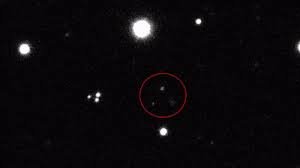
Asteroids: A Deep Dive into the Solar System’s Remnants
For centuries, humans have gazed at the night sky, wondering about the countless stars and celestial objects that populate the universe. Among these, asteroids hold a unique fascination – remnants from the early days of our solar system, offering clues to its formation and evolution. But what *are* asteroids, and should we be worried about them?
What Exactly is an Asteroid?
Asteroids are rocky, metallic objects orbiting the Sun, but are too small to be classified as planets. They are sometimes called “minor planets” or “planetoids.” Most asteroids reside in the main asteroid belt, a region between the orbits of Mars and Jupiter. However, some asteroids, known as Near-Earth Asteroids (NEAs), have orbits that bring them closer to Earth, sparking both scientific curiosity and concern.
Types of Asteroids
Asteroids aren’t all the same! Scientists categorize them based on their composition. The three main types are:
- C-type (Carbonaceous): The most common type, dark in color and rich in carbon. They are thought to be largely unchanged since the formation of the solar system.
- S-type (Silicaceous): Composed of silicate materials and nickel-iron. They are brighter than C-types and found closer to the Sun.
- M-type (Metallic): Primarily made of nickel-iron. These are relatively rare but potentially valuable due to their metallic content.
Understanding these different types helps scientists learn about the conditions present in the early solar system and the processes that shaped the planets.
The Asteroid Belt and Beyond
The main asteroid belt contains millions of asteroids, varying in size from a few meters to hundreds of kilometers in diameter. Ceres, the largest object in the asteroid belt, is even classified as a dwarf planet. However, asteroids aren’t confined to the main belt. Trojan asteroids share Jupiter’s orbit, and other groups are found in various locations throughout the solar system. The source of these asteroids is believed to be material that never coalesced into a planet due to Jupiter’s gravitational influence.
Asteroid Impacts and the Threat to Earth
Throughout Earth’s history, asteroids have collided with our planet, sometimes with catastrophic consequences. The most famous example is the Chicxulub impactor, believed to have contributed to the extinction of the dinosaurs around 66 million years ago. While large impacts are rare, they pose a real threat. NASA and other space agencies are actively tracking NEAs to assess their potential risk and develop strategies for planetary defense. This includes studying asteroid trajectories and exploring potential mitigation techniques, such as kinetic impactors or gravity tractors. You can learn more about NASA’s Planetary Defense Coordination Office here:
https://www.nasa.gov/planetarydefense
Exploring Asteroids: Missions and Discoveries
Several missions have been sent to study asteroids up close. The Rosetta mission, by the European Space Agency (ESA), famously landed a probe (Philae) on Comet 67P/Churyumov–Gerasimenko, providing invaluable data about cometary composition. NASA’s OSIRIS-REx mission successfully collected a sample from asteroid Bennu, which is expected to return to Earth in 2023, offering scientists a pristine sample for analysis. The Hayabusa missions from Japan also successfully returned asteroid samples. These missions are revolutionizing our understanding of asteroids and the early solar system. You can find more information about the OSIRIS-REx mission here:
https://www.nasa.gov/osiris-rex
The Future of Asteroid Research
Asteroid research is a dynamic and evolving field. Future missions will focus on characterizing more NEAs, developing advanced planetary defense technologies, and potentially even utilizing asteroids as resources for space exploration. The study of asteroids continues to unlock secrets about our solar system’s past and future, and offers a glimpse into the vastness and wonder of the universe.