html
US Solar Incentives Slashed: The Ripple Effect on Families, Jobs, and Clean Energy Goals
The promise of affordable clean energy for American households is dimming as federal solar incentives face abrupt cuts, leaving communities in disarray and the renewable energy industry bracing for impact.
A Sudden Halt to Solar Dreams Amidst Soaring Energy Costs
Just weeks ago, Brandon Praileau, a pastor from Norfolk, Virginia, was a beacon of hope for his community. Through the federally funded ‘Solar For All’ program, he was helping low and middle-income families embrace rooftop solar installations, promising a future free from the burden of escalating electricity bills. The program would cover installation costs, a significant hurdle for many.
Then, the news hit like a lightning bolt: the federal government abruptly scrapped the $7 billion ‘Solar For All’ initiative. Praileau, who was spearheading a Virginia project set to receive $156 million to assist 7,500 families, expressed he was “mind blown” by the sudden withdrawal. This wasn’t an isolated incident; it signaled a broader shift, with numerous renewable energy projects facing early termination or cancellation, jeopardizing the nation’s clean energy transition and climate objectives.
The Unraveling of Federal Solar Incentives
The ‘Solar For All’ program was not the only casualty. Other critical federal solar incentives are also being scaled back or eliminated:
- Residential Tax Credits: The 30 percent tax credit for home solar rooftop installations is set to expire this December, creating a frantic rush among homeowners to install systems before the deadline.
- Business Tax Credits: For businesses, these crucial tax credits will only be accessible if construction for solar-integrated factories, malls, or other commercial properties commences by June 2026, posing significant logistical challenges.
- Broader Renewable Energy Funding Cuts: The Department of Energy has withdrawn a staggering $13 billion from a diverse portfolio of renewable energy initiatives, including vital upgrades to power grids, projects for carbon-neutral cement production, and advanced battery energy storage solutions.
- Wind Energy Initiatives: Several funding programs for wind energy have also been terminated, with President Trump publicly stating his administration would not approve new windmills “unless something happens that’s an emergency.” Industry analysts, like BloombergNEF, project these delays and cancellations could translate into a colossal $114 billion loss for wind energy projects alone.
Real-World Impact: From Florida Homes to California Jobs
The immediate fallout is devastating. In Florida, 10,000 low- and middle-income households were on the cusp of enrolling for federal subsidies to install solar units when their $156 million project was unexpectedly cancelled. A Miami-Dade County resident confided her fear of using air conditioning due to the steep, 60 percent surge in power costs since 2019. This scenario highlights the urgent need for affordable clean energy solutions.
The early termination of these vital solar incentives means consumers are left vulnerable to the whims of utility companies and their perpetually rising rates. Bernadette Del Chiaro, senior vice president for California at the Environmental Working Group, warns that this leaves consumers “stuck at the mercy of utilities.”
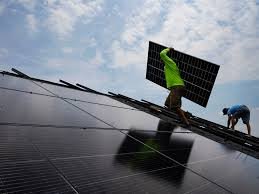
The solar installation industry is already feeling the pinch. Companies are scrambling to meet pre-deadline demand, with some even turning away customers. Industry leaders, like Barry Cinnamon of Cinnamon Energy Systems, describe the situation as a “big plunge on the solar coaster.” Ed Murray, President of the California Solar and Storage Association, anticipates the elimination of tax credits will double the payback period for solar installations to up to 12 years and trigger job losses for thousands of skilled workers. This also spells trouble for air quality and the state’s ambitious climate goals.
The Political Stance and Broader Implications
The Trump administration’s Department of Energy justified these withdrawals by labeling the projects as advancing “the previous Administration’s wasteful Green New Scam agenda.” Energy Secretary Chris Wright stated that returning these funds affirmed a commitment to “more affordable, reliable and secure American energy” and “more responsible stewards of taxpayer dollars.”
Critics of solar projects often argue they shift costs to households still reliant on the traditional power grid. In stark contrast to renewable energy cuts, the Trump administration has actively supported oil and gas production, including plans to expand leasing in the Arctic National Wildlife Refuge (ANWR) and easing drilling permits on federal lands.
However, the narrative of rising power costs isn’t solely tied to solar. A recent study by the Lawrence Berkeley National Laboratory revealed that electricity costs have outpaced inflation in 26 US states. Factors cited include the Ukraine war, which drove up natural gas prices, and extreme weather events like wildfires and hurricanes that inflict costly damage on aging electrical infrastructure. California, for instance, has seen prices jump over 34 percent since 2019, partly due to massive investments needed to strengthen power lines against record-breaking wildfires. Tragically, $630 million in federal funding earmarked for California grid strengthening was also among the projects scrapped.
An Uncertain Future and Lingering Hope
The impact extends beyond residential solar. Federal incentives for electric vehicles (EVs), which previously enabled middle-income families to adopt cleaner transportation, also ended in September. This raises concerns about equitable access to green technologies moving forward.
In Virginia, rising power costs remain a top concern for Praileau’s congregants, especially with the state’s high concentration of data centers. The cuts to the solar project are already facing legal challenges, and Praileau hopes for its revival under new leadership.
Florida, too, is embroiled in litigation over the federal funding cuts. While some states like California have announced their own rollbacks on renewable energy initiatives, the widespread financial pain inflicted by these federal withdrawals could spur more legal action. Steve Larson, former executive director of the California Public Utilities Commission, anticipates increased litigation to restore vital programs and potentially employ “techniques of delay” to keep renewable energy projects afloat.
The future of solar incentives in the US hangs in the balance, a critical test of the nation’s commitment to both economic stability and a sustainable environment.