Beyond the Void: The Fascinating Mystery of Asteroid Itokawa
Have you ever wondered what an asteroid is actually made of? While many imagine them as solid, monolithic chunks of space rock, the reality is often far more complex. Enter Asteroid Itokawa, a cosmic wanderer that has challenged our understanding of planetary science.
To celebrate Asteroid Day, we dive deep into the strange characteristics of this celestial body and the daring mission that brought a piece of it back to Earth.
A Rubble Pile in Space
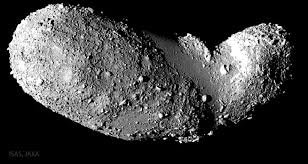
One of the most striking features of Itokawa is its surface. Some areas are rugged and cratered, while others are surprisingly smooth. Why the discrepancy? Scientists believe it’s because Itokawa is not a solid rock, but rather a “rubble pile”—a loose collection of boulders and debris held together by gravity.
This unique structure leads to a phenomenon known as the Brazil nut effect. In simple terms, the constant jostling and vibration of the asteroid cause smaller particles to settle at the bottom, while larger rocks migrate to the surface. This cosmic sorting process creates the smooth patches that puzzled astronomers for years.
The Hayabusa Mission: A Leap for Mankind
In 2005, the Japanese spacecraft Hayabusa achieved a historic milestone by visiting Itokawa. The mission was not just about observation; it was about contact. The spacecraft successfully touched down on a smooth region nicknamed the MUSES Sea to collect soil samples.
- n
- The Goal: To understand the composition of near-Earth objects.
- The Achievement: Returning physical samples to Earth for laboratory analysis.
- The Discovery: These samples provide a prehistoric record of the early Solar System, acting as a time capsule from billions of years ago.
Will Itokawa Ever Hit Earth?
While the thought of a space rock colliding with our planet is the plot of many Hollywood movies, the reality is a matter of long-term calculation. Computer simulations conducted by NASA and other space agencies suggest that the 500-meter-wide asteroid Itokawa could potentially impact Earth—but not for another few million years.
For now, Itokawa remains a scientific treasure, teaching us about the dynamics of the universe and the fragile origins of our own cosmic neighborhood.