
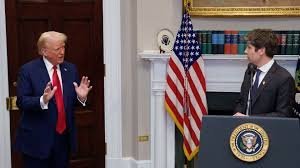
Trump AI Executive Order: What a Shift in Policy Means for the Future of Technology
The landscape of Artificial Intelligence is evolving faster than the laws meant to govern it. As political tides shift, the conversation surrounding a potential Trump AI executive order has ignited a fierce debate among tech giants, policymakers, and ethics experts. While the previous administration focused heavily on safety guardrails and equity, a new approach promises to prioritize one thing above all: unbridled innovation.
The Core Conflict: Regulation vs. Acceleration
For the past few years, the US government has leaned toward a cautious approach to AI. The existing frameworks aimed to mitigate algorithmic bias and ensure that AI development didn’t outpace human safety. However, critics argue that these “guardrails” have become hurdles.
A potential Trump AI executive order would likely aim to dismantle these restrictions. The goal would be to ensure that the United States remains the global leader in AI, preventing other nations—most notably China—from seizing the technological advantage. By removing what are perceived as “regulatory bottlenecks,” the US could accelerate the deployment of generative AI and autonomous systems.
Key Potential Changes in AI Policy
- n
- Deregulation: Scaling back mandates that require rigorous safety testing before public release.
- Focus on Competition: Prioritizing speed and efficiency to outpace international rivals.
- Economic Incentives: Potential tax breaks or subsidies for domestic AI hardware and infrastructure.
- Free Speech in AI: Reducing restrictions on AI model outputs to prevent what some call “political bias” in LLMs.
n
n
n
n
Impact on Big Tech and Startups
For companies like OpenAI, Google, and Meta, a shift in the Trump AI executive order framework could mean a more permissive environment for experimentation. Startups, in particular, might find it easier to bring products to market without the looming fear of heavy federal oversight.
However, this “Wild West” approach isn’t without risk. Without centralized safety standards, the industry may face fragmented private regulations or a potential backlash from the public if AI-driven mishaps occur. To understand the current state of federal AI guidelines, you can visit the White House AI Bill of Rights, which represents the current focus on protection and transparency.
The Geopolitical Stakes: US vs. China
At the heart of any Trump AI executive order is the geopolitical struggle for supremacy. The argument is simple: the first nation to master Artificial General Intelligence (AGI) will hold the keys to the global economy and military superiority. By stripping away regulatory friction, the US aims to move from a position of “cautious leadership” to “aggressive dominance.”
Conclusion: Balancing Progress and Prudence
Whether a new executive order brings a golden age of productivity or a chaotic era of unchecked technology remains to be seen. What is certain is that the intersection of politics and AI will define the next decade of human progress. The tension between safety and speed is no longer just a technical challenge—it is a political one.
Stay tuned to the latest updates in tech policy to see how these changes will impact your business and digital life.



