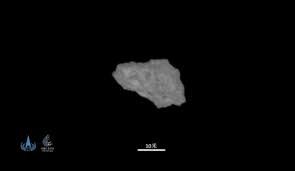
Unveiling the Mysteries of the Cosmos: The Tianwen-2 Mission
Space exploration has entered a new era of competition and discovery. Following the success of its Mars mission, the China National Space Administration (CNSA) is gearing up for its next ambitious leap: Tianwen-2. This mission isn’t just about visiting a distant rock; it’s a sophisticated operation designed to retrieve a piece of the early solar system and bring it back to Earth.
What Exactly is Tianwen-2?
Tianwen-2 is a sample-return mission targeting a near-Earth asteroid (NEA). Unlike previous orbiters that simply observed from a distance, Tianwen-2 is engineered to land on an asteroid, collect a physical sample of its surface, and transport that material back to laboratories on Earth.
This mission is a critical stepping stone in China’s long-term goal of becoming a leader in deep-space exploration, mirroring the complexity and ambition seen in NASA’s OSIRIS-REx or JAXA’s Hayabusa2 missions.
The Primary Objectives of the Mission
The goals of Tianwen-2 extend beyond mere prestige. The mission seeks to answer fundamental questions about our origins:
- n
- Composition Analysis: By studying the asteroid’s chemical makeup, scientists can understand the materials that existed during the formation of the solar system.
- Trajectory Precision: Testing the ability to navigate and land on a small, low-gravity body with extreme accuracy.
- Sample Return Technology: Perfecting the complex process of capturing material in vacuum conditions and protecting it during the high-speed re-entry into Earth’s atmosphere.
Why Near-Earth Asteroids Matter
Near-Earth Asteroids are often described as “time capsules.” Because they have remained relatively unchanged for billions of years, they hold clues about the water and organic molecules that may have seeded life on Earth. Furthermore, understanding these bodies is essential for planetary defense—knowing how to reach and manipulate an asteroid is the first step in preventing potential impacts with our planet.
The Technical Challenge: A High-Stakes Game
Executing a mission like Tianwen-2 is an engineering marvel. The spacecraft must perform a series of precise maneuvers, including:
- Deep Space Navigation: Traveling millions of kilometers with pinpoint accuracy.
- Touch-and-Go Sampling: Touching the surface just long enough to collect dust and rocks without crashing.
- Return Capsule Deployment: Ensuring the sample remains uncontaminated and intact during the return trip.
Conclusion: A New Chapter in Astronomy
The Tianwen-2 mission represents more than just a national achievement; it is a contribution to global science. As we peel back the layers of the solar system, missions like these bring us closer to understanding where we came from and where we are headed in the vastness of space.
Stay tuned as the CNSA continues to push the boundaries of technology, turning the dreams of interstellar discovery into a tangible reality.