Reaching for the Clouds: The Fascinating World of the Tallest Buildings
Human ambition has always been measured by how high we can build. From the ancient pyramids to the glittering skylines of the 21st century, the race to create the world’s tallest buildings is more than just a quest for prestige; it is a testament to engineering brilliance and urban evolution.
But have you ever wondered who actually decides which building is the tallest? It isn’t as simple as pulling out a measuring tape. This is where the Council on Vertical Urbanism (formerly known as the Council on Tall Buildings and Urban Habitat) comes in.
The Science of Height: Spires vs. Antennas
Since 1996, the Council on Vertical Urbanism has set the global gold standard for measuring skyscrapers. The need for strict criteria arose from a classic architectural debate: were the Petronas Towers in Kuala Lumpur taller than the Sears Tower in Chicago?
To resolve this, the organization established a fundamental rule that still governs the rankings today:
- n
- Spires count: Architectural spires are included in the total height.
- Antennas do not: Technical equipment, signs, and aerials are excluded.
- The 50% Rule: To be classified as a “building” rather than a “tower,” at least 50% of the structure’s height must be occupiable. This is why the Tokyo Skytree, despite its massive height, is classified as a telecommunications tower and not a skyscraper.
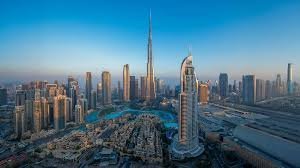
This leads to a phenomenon known as “vanity height”—portions of a building that serve no functional purpose other than to boost its rank. For instance, the Burj Khalifa boasts approximately 244 metres of vanity height, nearly a third of its total stature.
The Elite List: Top 10 Tallest Buildings on Earth
Currently, the rankings are dominated by Asian and Middle Eastern marvels. Here are the titans of the sky:
- Burj Khalifa (Dubai): The undisputed champion since 2010. Designed by Adrian Smith for SOM, its buttressed core allows it to reach unprecedented heights.
- Merdeka 118 (Kuala Lumpur): A stunning tower featuring a 120-degree twist designed to reduce wind load by 25%.
- Shanghai Tower (Shanghai): An eco-friendly giant with a double-skin glass façade and 270 integrated wind turbines.
- Makkah Royal Clock Tower (Mecca): The tallest building ever constructed for a religious purpose, featuring a clock visible from 25 kilometres away.
- Ping An Finance Center (Shenzhen): A stainless steel marvel built to withstand subtropical humidity.
- Lotte World Tower (Seoul): Inspired by traditional Korean ceramics, it houses a luxury hotel and the breathtaking Seoul Sky observation deck.
- One World Trade Center (New York): The only US building in the top ten, standing at a symbolic 1,776 feet.
- Guangzhou CTF Finance Centre (Guangzhou): An aerodynamic structure designed to “confuse the wind.”
- Tianjin CTF Finance Centre (Tianjin): A sibling to the Guangzhou tower, mirroring its impressive height and utility.
- CITIC Tower (Beijing): Modelled after the zun (a traditional Chinese ritual vessel), it serves as a hub for corporate offices.
The Unfulfilled Dream: The One-Kilometre Mark
For over a century, architects have dreamed of breaking the 1,000-metre barrier. While the Burj Khalifa came close, the true “kilometre club” remains elusive. Projects like the Jeddah Tower (intended to reach 1,008 metres) and the Dubai Creek Tower have faced intermittent construction halts and delays.
Whether these giants will eventually pierce the clouds remains to be seen, but one thing is certain: the pursuit of the world’s tallest buildings continues to push the boundaries of what is possible in modern architecture and structural engineering.