
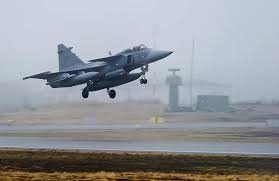
The Evolution of Speed and Power: Understanding Modern Fighter Jets
For decades, fighter jets have represented the absolute peak of aerospace engineering. These aircraft are not just machines of war; they are complex integration hubs of sensors, propulsion systems, and cutting-edge materials designed to dominate the skies. From the early dogfights of the mid-20th century to the invisible ghosts of the 5th generation, the evolution of these aircraft has fundamentally changed global geopolitics.
What Defines a Modern Fighter Jet?
A modern fighter jet is more than just a fast plane. To achieve air superiority, these aircraft rely on a combination of several critical technological pillars:
- n
- Stealth Technology: Using specialized shapes and radar-absorbent materials (RAM) to reduce the aircraft’s radar cross-section, making it nearly invisible to enemy detection.
- Supercruise: The ability to maintain supersonic speeds without the use of fuel-heavy afterburners.
- Sensor Fusion: Integrating data from radar, infrared sensors, and electronic warfare suites into a single, intuitive display for the pilot.
- Maneuverability: Utilizing thrust vectoring to perform acrobatic maneuvers that would be impossible for conventional aircraft.
The Titans of the Sky: Top Contemporary Aircraft
When discussing the current landscape of fighter jets, a few names stand out as the gold standard of aviation technology. According to industry leaders like Lockheed Martin, the integration of software and hardware is what separates a great jet from a legendary one.
1. The F-22 Raptor
Widely considered the most capable air-superiority fighter ever built, the Raptor combines stealth, speed, and agility. It is designed to clear the skies of enemy aircraft before the opponent even knows it is there.
2. The F-35 Lightning II
The F-35 is a multi-role powerhouse. Unlike the F-22, the Lightning II is designed for versatility—ground attack, reconnaissance, and air-to-air combat—making it the backbone of many NATO air forces.
3. The Su-57 and J-20
Russia and China have also entered the 5th-generation race with the Su-57 and the Chengdu J-20, respectively, focusing on long-range interception and advanced electronic warfare capabilities.
The Future: Towards the 6th Generation
The horizon of aviation is shifting. The next leap in fighter jets involves the integration of Artificial Intelligence (AI) and “Loyal Wingman” programs. These are unmanned drones that fly alongside manned jets, acting as sensors or weapon platforms to reduce the risk to human pilots.
As we look toward the future, the study of aerodynamics continues to evolve through research conducted by organizations like NASA, pushing the boundaries of hypersonic flight—speeds exceeding Mach 5.
Conclusion
Fighter jets remain the ultimate symbol of technological prestige and national security. Whether it is the invisibility of stealth coatings or the raw power of twin-turbofan engines, these machines continue to push the limits of what is humanly and mechanically possible in the atmosphere.



