Tesla FSD v15: A Giant Leap Toward Full Autonomy or More Hype?
The Next Frontier: Tesla Unveils Full Self-Driving (FSD) v15
Tesla has officially begun the rollout of Full Self-Driving (FSD) v15, and if the promises hold true, this isn’t just a minor tweak—it’s a comprehensive overhaul of the end-to-end driving network. For years, FSD users and critics have pointed out specific, recurring weaknesses. With v15, Tesla is aiming directly at those pain points.
Targeting the Weak Points: What’s Actually New?
Rather than adding flashy but useless features, FSD v15 focuses on the “gritty” details of driving that separate a good system from a truly autonomous one. The update specifically targets:
- n
- Precision Sign Detection: Addressing previous failures where the system ignored speed limits or misread signs.
- Pothole Avoidance: A feature long-promised by Elon Musk that aims to stop cars from driving straight into road hazards.
- School Zone Intelligence: Improved speed handling in sensitive areas to align with safety regulations and NHTSA expectations.
- Speed Camera Awareness: The system can now automatically slow down when approaching speed cameras.
- Bike Rack Mode: A practical addition allowing the system to function correctly when a hitch accessory is attached.
Reality View: A Visual Revolution
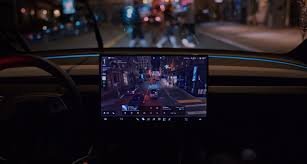
The most striking addition to v15 is “Reality View” (also referred to as Tesla Augmented Reality). This new live visualization replaces fragmented model signals with a single, high-fidelity rendered version of the environment on the center screen.
This isn’t just about aesthetics. By allowing drivers to see exactly what the AI is planning and perceiving in real-time, Tesla aims to make the supervision of the system significantly more intuitive and less stressful.
The “25x” Safety Claim: Breaking Down the Math
Tesla claims a 25x improvement in handling safety-critical cases. Specifically, this refers to the new vision encoder improving the critical intervention rate. While Tesla hasn’t released the raw data, the implications are massive.
If FSD v14 managed a few thousand miles between critical interventions, a 25x jump could theoretically push that number toward 50,000 miles. This would place Tesla well beyond the threshold needed for limited unsupervised services, potentially paving the way for the long-awaited Robotaxi fleet.
Hardware and Compatibility
For those wondering about their vehicle’s compatibility, Tesla has confirmed that the AI4 (HW4) computer is fully capable of running v15. While the rollout is gradual, the transition to this more powerful hardware is essential for processing the complex end-to-end networks that v15 utilizes.
Skepticism and the Road Ahead
Despite the excitement, some caution is warranted. History shows that FSD updates often move “two steps forward and one step back.” V14, for instance, suffered from “brake stabbing” and hallucinations before stabilizing.
Furthermore, the industry remains curious as to why Tesla hasn’t yet applied for a California DMV permit for driverless testing. Since California is a prime market for autonomous ride-sharing, the lack of transparent disengagement data remains a point of contention for skeptics.
Final Verdict
If FSD v15 delivers on its promise to fix potholes, respect school zones, and provide a clear visual window into the AI’s mind via Reality View, it will be the most significant update in Tesla’s history. We are moving closer to a world where the driver is truly a passenger—but for now, stay alert and keep your eyes on the road.
📰 You May Also Like