
SpaceX Starship Flight 13: Breakthroughs, Setbacks, and the Future of Space Exploration
The journey to making humanity a multi-planetary species is rarely a smooth ride. The latest chapter in this saga, SpaceX’s Starship Flight 13, has provided a gripping mix of unexpected triumphs and harsh realities. While the mission pushed the boundaries of aerospace engineering, it also reminded us that the ocean is a formidable opponent.
The Dramatic Indian Ocean Adventure
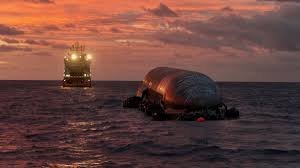
On July 24, the world watched as the massive Starship megarocket lifted off from the Starbase site in South Texas. Flight 13 was designed to test the limits of the 171-foot-tall (52 meters) upper stage, known as Ship. In a surprising turn of events, the Ship survived its descent and splashed down in the Indian Ocean off the coast of Western Australia, remaining largely intact even after toppling over in the waves.
However, the victory was short-lived. Despite the recovery team’s best efforts to tow the spacecraft to shore, the harsh conditions of the sea proved too much. Elon Musk, CEO of SpaceX, recently shared a sobering update via X (formerly Twitter):
“Unfortunately, ship recovery is not looking good right now. Nonetheless, we were able to obtain close-up photos of critical regions of the heat shield and engines for future upgrades.”
Solving the Heat Shield Puzzle
While the physical recovery of the vehicle may have failed, the mission achieved a critical technical milestone. The heat shield—the protective layer that allows Starship to survive the searing temperatures of atmospheric reentry—has long been described by Musk as the biggest hurdle to operational flight.
During a recent quarterly earnings call, Musk expressed optimism, suggesting that the heat shield problem might finally be solved. This is a game-changer for the industry because the goal of Starship is full and rapid reusability. If SpaceX can perfect the heat shield, they can turn around rocket launches with the frequency of commercial aircraft, drastically reducing the cost of access to space.
Starlink V3: A Glimpse into the AI Future
Beyond the hardware tests, Flight 13 served as a proof-of-concept for SpaceX’s broader ambitions. During its suborbital journey, the Ship successfully deployed 20 functional Starlink V3 satellites. These next-generation broadband spacecraft are larger and more capable than their predecessors.
This deployment is a stepping stone toward a staggering goal: a constellation of roughly 100,000 Starlink V3s. This network is intended to support a massive AI constellation in Earth orbit, potentially revolutionizing global connectivity and data processing.
Why Starship Matters for Humanity
Standing at 408 feet (124 meters) when fully stacked, Starship is the most powerful rocket ever constructed. Its success isn’t just about corporate milestones; it’s about the future of exploration. From establishing a permanent base on the Moon to eventually reaching Mars, the lessons learned from Flight 13—both the wins and the losses—are paving the way.
To learn more about the current state of space exploration, you can visit the official SpaceX website or explore the latest lunar missions at NASA.gov.
Key Takeaways from Flight 13:
- Resilience: The Ship survived a splashdown that would have destroyed previous iterations.
- Technical Win: The heat shield performance indicates a major breakthrough in reusability.
- Scaling Up: Successful deployment of Starlink V3 satellites proves the vehicle’s capacity for large-scale orbital delivery.
- Environmental Challenges: Ocean recovery remains a high-risk operation due to unpredictable sea conditions.



