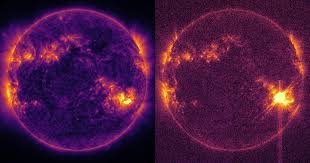
The Cosmic Tug-of-War: When the Sun Attacks
Imagine a magnetic rubber band, stretched and twisted to its absolute limit, suddenly snapping. On a galactic scale, this is exactly what happens when the sun releases bursts of superheated ionized gas and radiation toward Earth. While these solar storms often gift us with breathtaking auroras, they carry a hidden threat that could plunge modern civilization into darkness.
In May 2024, the world witnessed the “Gannon storm,” the most significant solar event in over two decades. While it painted the skies in vibrant colors across all 50 US states and as far as the Bahamas, it served as a stark warning of our vulnerability in a digitally dependent era.
Lessons from the Past: The Gannon Storm vs. The Carrington Event
To understand the risk, we must look at history. In September 1859, the Carrington Event struck—the most intense geomagnetic storm ever recorded. It was so powerful that telegraph systems failed globally, sparking fires in some offices.
The Gannon storm of 2024 was roughly three times less intense than the Carrington Event, yet it still left a mark. While it didn’t cause widespread blackouts, it disrupted precision GPS sensors, forcing farmers in 12 US states to halt planting. The economic toll? An estimated $500 million to $1 billion in losses. This suggests that even “moderate” solar storms can hit our wallets hard.
Mapping the Danger: Which Regions Are Most Vulnerable?
New research published in AGU Advances provides a terrifyingly detailed map of how a severe solar storm would impact the United States today. According to the study, the risks are not evenly distributed.
High-Risk Zones:
- The Northeast and Northern Plains: These areas are most susceptible due to their high latitudes and highly resistive bedrock, which prevents electric currents from dissipating into the Earth’s core.
- The East Coast Grid: Because the eastern US is linked in a single massive grid interconnection, a voltage failure in Maine could potentially cascade all the way to Washington, D.C.
Researchers estimate that a 250-year solar event could result in economic losses of $1.5 billion to $2 billion per day, affecting millions of people and thousands of businesses.
How a Solar Storm Actually “Breaks” the Grid
It isn’t a direct hit of fire, but rather a complex electromagnetic interaction. When a National Oceanic and Atmospheric Administration (NOAA) forecaster warns of an incoming storm, they are tracking changes in Earth’s magnetic field.
The process works like this:
- The solar storm rapidly shifts Earth’s magnetic field.
- This induces electric fields in the ground.
- These currents flow through grounded high-voltage transmission lines and transformers.
- The excess current pushes transformers into an unbalanced state, causing voltage to drop.
- To prevent total equipment destruction, the grid may automatically disconnect, leading to widespread blackouts.
Are We Prepared for the “Big One”?
The good news is that we aren’t defenseless. Organizations like the North American Electric Reliability Corporation (NERC) have developed protocols to stabilize the grid. During the Gannon storm, NOAA provided a six-hour warning, allowing operators to add extra generators and cancel maintenance to fortify the system.
However, a significant challenge remains: aging infrastructure. Many transformers in the US grid are 50 to 100 years old and were not designed for the extreme induced currents of a Carrington-level event. While newer models are more resilient, the sheer scale of the old grid remains a critical weakness.
Beyond the Power Grid: Satellites and Drones
The danger isn’t limited to the ground. According to NASA data and space weather experts, nearly half of all active satellites in low-Earth orbit were affected during the May 2024 event. These satellites experienced atmospheric drag and required orbital readjustments, causing temporary degradations in internet and communication services.
As we launch more drones and commercial satellites, our “digital canopy” becomes more exposed to the sun’s volatility.
Final Thoughts: A Wake-Up Call from the Stars
Solar storms are inevitable; they don’t follow a schedule. They could strike next week or in a century. While we may not be sent back to the Stone Age, the societal and economic impact of a major event would be catastrophic if we remain complacent. The beauty of the aurora is a reminder of the sun’s power—and a nudge to keep building a more resilient world.