Russian Starlink Alternative: The Truth Behind the Rassvet Constellation Orbit Failures
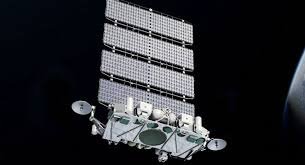
The Struggle for Space Dominance: Russia’s Rassvet Constellation Faces Orbital Setbacks
In the high-stakes race to establish global satellite internet, Russia is pushing forward with its own answer to SpaceX’s Starlink. However, the road to orbital success is rarely smooth. Recently, the Rassvet constellation, developed by the ambitious Bureau 1440, has encountered a series of technical hurdles, culminating in a notable Russia Rassvet constellation orbit failure.
The Loss of Satellite No. 17
On October 30, the space community observed the demise of the Rassvet-3 satellite (No. 17, NORAD ID 100083). After spending just over three months in space, the spacecraft burned up upon reentry into the dense layers of Earth’s atmosphere.
The cause of the failure appears to be a critical malfunction in the satellite’s propulsion system. According to tracking data, Satellite No. 17 never activated its thrusters or performed any necessary orbital corrections after its launch on July 19 via a Soyuz-2.1b rocket. Without the ability to fight against atmospheric drag, the satellite’s altitude gradually plummeted until it reached a critical point of no return.
A Pattern of Instability or Growing Pains?
This isn’t the first time Bureau 1440 has faced such a loss. This incident marks the second time a Rassvet satellite has plummeted due to propulsion failure. A previous satellite, No. 4 (NORAD ID 68363), suffered a similar fate on June 6 after failing to correct its orbit following its March launch.
However, it’s not all bad news for the Russian program. In a display of rapid response, Russian technicians managed to save Satellite No. 23 on October 20. Just as it was nearing the danger zone at 220 km, they successfully raised its orbit to approximately 300 km, preventing another catastrophic reentry.
Understanding the “500 km Plateau”
Critics have pointed out that many Rassvet satellites seem “stuck” at an altitude of 500 km, despite a planned target of 800 km. However, this is a strategic maneuver rather than a mission failure. Here is how the deployment is actually working:
- n
- Current Phase: 26 of the 30 satellites in orbit are concentrating at 500 km.
- Positioning: At this altitude, the satellites are spreading out to take their required orbital positions.
- Final Ascent: Once the grid is established, the constellation will begin a synchronized ascent to the final 800 km target.
Military Applications and Operational Tests
Despite the slow deployment and occasional failures, the Rassvet constellation is already being put to work. Bureau 1440 is currently testing communication terminals in the most remote regions of Russia. More controversially, there are reports that these terminals have been integrated into Russian UAVs used in conflicts in Ukraine, highlighting the strategic military importance of this network.
Putting Failures in Perspective: The Starlink Comparison
While these failures may seem alarming, they are common in the early stages of satellite constellation deployment. Even SpaceX’s Starlink experienced significant teething problems. During its initial launch of 60 satellites, 10 failed to reach their intended orbits—some due to technical glitches and others as deliberate tests of deorbiting capabilities.
Conclusion: The Russia Rassvet constellation orbit failure of Satellite No. 17 is a setback, but it represents the inherent risks of first-generation production hardware. As Bureau 1440 continues to refine its technology, the project remains a critical pillar of Russia’s goal to achieve digital sovereignty in the stars.
📰 You May Also Like