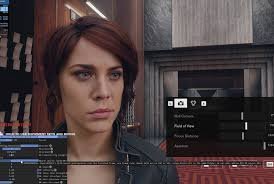
NVIDIA DLSS 5: The Next Frontier of AI-Powered Gaming
For years, NVIDIA has been leading the charge in redefining how we experience virtual worlds. From the introduction of Ray Tracing to the revolutionary Deep Learning Super Sampling (DLSS), the goal has always been the same: delivering breathtaking visuals without sacrificing performance. As we look toward the horizon, the buzz around DLSS 5 is growing. But what exactly can we expect from the next generation of AI upscaling?
The Evolution: How We Got to the Brink of DLSS 5
To understand where DLSS 5 is going, we have to look at where it started. DLSS has evolved from a simple image reconstruction tool into a complex AI suite:
- DLSS 2 (Super Resolution): Introduced AI-driven upscaling, allowing games to run at lower resolutions while looking like 4K.
- DLSS 3 (Frame Generation): Added the ability to create entirely new frames using AI, drastically increasing smoothness on RTX 40-series cards.
- DLSS 3.5 (Ray Reconstruction): Focused on improving the quality of ray-traced effects, replacing hand-tuned denoisers with an AI network.
With each iteration, NVIDIA has moved closer to a world where the GPU doesn’t just render pixels, but imagines the scene.
What Could NVIDIA DLSS 5 Bring to the Table?
While NVIDIA hasn’t officially unveiled the specifications for DLSS 5, industry trends and leaks suggest a shift toward “AI-Native Rendering.” Here are the most anticipated features:
1. Full-Scene AI Generation
We might see a transition from generating frames to generating entire sections of a scene. Imagine a world where the AI handles the most taxing lighting and geometry calculations in real-time, reducing the load on the hardware significantly.
2. Neural Texture Compression
DLSS 5 could introduce advanced AI-driven texture handling, allowing for incredibly high-detail assets that take up minimal VRAM, effectively eliminating the bottleneck for 8K gaming.
3. Hyper-Realistic Latency Reduction
Building upon NVIDIA Reflex, DLSS 5 could integrate AI to predict user input more accurately, making the gap between a button press and an on-screen action virtually non-existent.
Hardware Requirements: Will You Need a New GPU?
History tells us that major DLSS leaps often coincide with new hardware architectures. Just as Frame Generation required the Optical Flow Accelerator in the RTX 40-series, DLSS 5 will likely be optimized for the upcoming NVIDIA Blackwell architecture (RTX 50-series).
While basic upscaling usually remains available for older cards, the “magic” of DLSS 5—such as advanced AI generation—will likely be reserved for the latest generation of Tensor cores.
The Impact on the Gaming Industry
The shift toward AI-driven graphics means that developers can push the boundaries of realism without worrying that their game will only run on a handful of top-tier PCs. By leveraging DLSS 5, we can expect:
- Path Tracing for Everyone: Full path tracing (the “holy grail” of lighting) becoming a standard rather than a luxury.
- Higher Stability: More consistent frame rates even in the most demanding open-world environments.
- Enhanced Accessibility: High-fidelity gaming becoming accessible to a wider range of hardware via smarter AI optimization.
Final Thoughts
NVIDIA DLSS 5 isn’t just about more frames per second; it’s about the fundamental evolution of rendering. As AI continues to integrate deeper into the silicon, the line between pre-rendered cinematics and real-time gameplay will continue to blur.
Stay tuned for more updates as we approach the next generation of RTX graphics. The future of gaming isn’t just being rendered—it’s being imagined by AI.