
The Fine Line Between Innovation and Deception: The Nikon AI Scandal
In the world of scientific photography, the goal is to capture the unseen truths of nature. However, a recent controversy surrounding Nikon AI and generative tools has sparked a heated debate about ethics, authenticity, and the future of microscopic imaging.
Nikon, a leader in optical technology, recently had to take the drastic step of disqualifying a winner from its prestigious Small World In Motion contest. The competition, which has celebrated the beauty of the microscopic world for 15 years, focuses on images and videos captured using powerful microscopes. This time, however, the “beauty” was artificial.
What Happened? The Case of the Fabricated Cilia
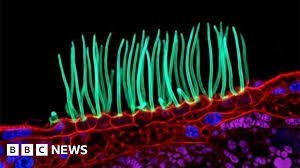
The disqualification involved Dr. Ning Xu from Tsinghua University in China. Dr. Xu submitted a captivating short video depicting cilia—tiny, hair-like structures—moving within the airway of a child suffering from Primary Ciliary Dyskinesia (PCD). While visually stunning, the submission raised immediate red flags among the scientific community.
After a thorough re-evaluation and consultations with judging panels, Nikon concluded that the video “did not comply with the competition rules regarding generative AI.” While Nikon clarified that this was not a judgment on Dr. Xu’s overall professional reputation, the breach of contest rules was undeniable.
Why Experts Were Alarmed
The controversy didn’t start with the judges, but with the experts. Several scientists took to LinkedIn to voice their concerns, claiming the video looked “too perfect” to be real. Among them was Dr. Robert Hirst, a leading scientist for the NHS centre for PCD diagnosis at the University of Leicester.
With 20 years of experience diagnosing PCD by analyzing cilia waveform, length, and cell shape, Dr. Hirst stated he knew immediately that the video was fabricated. According to him, the depicted cells “look nothing like those from PCD patients.”
This isn’t just about a trophy; it’s about the patients. Dr. Hirst emphasized that such fabrications can negatively impact patients, doctors, and support networks who rely on accurate scientific representations of the disease.
The Future of AI in Science: Tool or Threat?
This incident highlights a growing challenge in the digital age: the rise of generative AI in fields where empirical evidence is paramount. While AI can be a powerful tool for data analysis and visualization, its use in creating “fake” evidence threatens the core of scientific integrity.
- n
- Rule Re-evaluation: Nikon is now reviewing its procedures to ensure that future contests have airtight guards against AI-generated content.
- Verification Processes: There is a growing call for stricter verification of raw data in scientific competitions.
- Ethical Guidelines: The scientific community is urging a clearer distinction between “AI-enhanced” and “AI-generated” imagery.
For more information on the ethical use of artificial intelligence in research, you can explore the guidelines provided by Nature Portfolio on AI in scientific publishing.
Conclusion
The Nikon AI controversy serves as a cautionary tale. As generative tools become more sophisticated, the responsibility to maintain transparency becomes even more critical. In the pursuit of the “perfect image,” we must not lose sight of the truth—because in science, the truth is the only thing that truly matters.