
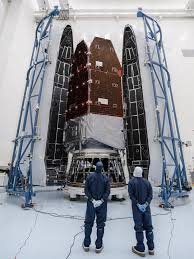
Unlocking the Mysteries of the Cosmos: The Dawn of the Roman Space Telescope
The universe is vast, mysterious, and filled with secrets that have eluded humanity for centuries. Now, NASA is preparing to launch a game-changer. The Nancy Grace Roman Space Telescope is not just another observatory; it is a next-generation powerhouse designed to peel back the curtain on the most elusive forces in existence, including the enigmatic dark energy.
Named after NASA’s first chief astronomer, the Roman telescope is set to redefine our understanding of the cosmos. If you are a space enthusiast or a science lover, mark your calendars for one of the most significant astronomical events of the year.
Why the Roman Telescope is a Big Deal
While the Hubble Space Telescope gave us breathtaking views of the deep universe, the Nancy Grace Roman Space Telescope takes a different approach. It combines sharp infrared vision with a field of view at least 100 times larger than Hubble’s. Imagine the difference between looking through a straw and looking through a wide-angle lens—that is the leap in capability we are seeing here.
The mission’s primary objectives include:
- n
- Investigating Dark Energy and Dark Matter: Understanding the invisible forces that accelerate the expansion of the universe.
- Exoplanet Discovery: Finding and characterizing planets orbiting other stars.
- Galactic Mapping: Creating a map of billions of galaxies to study the evolution of the universe.
- Black Hole Research: Diving deeper into the physics of the most dense objects in space.
Launch Details: When and Where to Watch
The excitement reaches its peak on Sunday, August 30. NASA and SpaceX are targeting a liftoff no earlier than 7:26 a.m. EDT. The mission will blast off aboard a powerful SpaceX Falcon Heavy rocket from Launch Complex 39A at the Kennedy Space Center in Florida.
Want to witness history? Live coverage begins at 6:20 a.m. EDT and will be streamed across multiple platforms. You can watch the action unfold in real-time at nasa.gov/live.
The Countdown: Key Events to Follow
The launch is the finale of a series of high-profile events. Here is the schedule you need to know:
| Date/Time (EDT) | Event |
|---|---|
| Aug 29, 9:00 a.m. | Mission Science Briefing |
| Aug 29, 10:30 a.m. | Prelaunch News Conference |
| Aug 29, 11:45 a.m. | Special Flyby by NASA Administrator Jared Isaacman |
| Aug 30, 7:26 a.m. | Official Launch |
| Aug 30, 9:30 a.m. | Post-launch News Conference |
Where is it Going? The Journey to L2
Once the Falcon Heavy delivers the telescope into space, the Roman observatory will embark on a journey to the second Sun-Earth Lagrange point (L2). Located approximately one million miles from Earth, L2 provides the perfect stable environment for the telescope to maintain its temperature and keep a clear view of the deep void.
The mission is planned for a primary lifetime of five years, though NASA hopes it will continue providing groundbreaking data for at least a decade. Best of all, the science data will be publicly available after processing, allowing researchers worldwide to contribute to these discoveries.
A Global Effort for Universal Discovery
This mission is a testament to international cooperation. While managed by NASA Goddard, it involves contributions from the European Space Agency (ESA), JAXA (Japan), CNES (France), and the Max Planck Institute for Astronomy in Germany.
Stay tuned to the official NASA Roman telescope page for the latest updates and breathtaking imagery from the edge of the observable universe!



