NASA Curiosity Rover: Unlocking the Secrets of the Red Planet
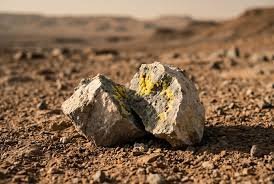
Exploring the Red Planet: The Incredible Journey of the NASA Curiosity Rover
For decades, humanity has looked at the crimson glow of Mars and wondered: Were we ever alone? To answer this profound question, NASA launched one of the most ambitious missions in space history: the NASA Curiosity Rover. Part of the Mars Science Laboratory (MSL) mission, Curiosity isn’t just a robot; it’s a mobile geochemical laboratory designed to determine if Mars ever offered environmental conditions favourable for microbial life.
What Exactly is the Curiosity Rover?
Landing in the Gale Crater back in August 2012, the Curiosity rover represents a pinnacle of human engineering. Unlike its predecessors, Curiosity is roughly the size of a small SUV and is powered by a multi-mission radioisotope thermoelectric generator (MMRTG), allowing it to operate regardless of sunlight and dust storms.
Its primary objectives include:
- Analyzing Habitability: Assessing whether the landing site ever had the right ingredients for life.
- Studying Climate: Tracking the Martian weather and atmospheric changes.
- Geological Mapping: Examining the mineralogy and structure of the Martian surface.
Game-Changing Discoveries on Mars
Since its touchdown, the NASA Curiosity Rover has provided a wealth of data that has rewritten textbooks. One of its most significant breakthroughs was the discovery of ancient streambeds, suggesting that liquid water once flowed across the surface of Mars for millions of years.
Furthermore, Curiosity has detected organic molecules—the carbon-based building blocks of life—trapped within sedimentary rocks. While this doesn’t prove that life existed, it confirms that the necessary chemistry for life was present on the Red Planet.
The Technology Behind the Mission
To achieve these feats, the rover is equipped with an impressive suite of instruments, including:
- ChemCam: A laser that vaporizes rocks to analyze their chemical composition.
- SAM (Sample Analysis at Mars): An instrument that searches for organic compounds.
- MAHLI: A high-resolution camera that acts as the rover’s “magnifying glass.”
These tools allow scientists on Earth to virtually “touch” and analyze the Martian terrain from millions of kilometres away, providing insights that were previously unimaginable.
Why the Curiosity Mission Matters for Humanity
The work of the NASA Curiosity Rover paves the way for future exploration. By understanding the history of water and chemistry on Mars, we can better prepare for the eventual arrival of human astronauts. The data collected by Curiosity is essential for the Mars Sample Return mission, which aims to bring Martian soil back to Earth for deeper analysis.
As Curiosity continues its climb up Mount Sharp, every rock sample and panoramic photo brings us one step closer to understanding our place in the universe.
📰 You May Also Like