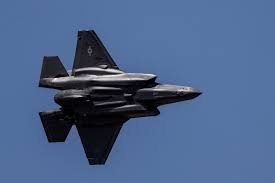
The Pinnacle of Aviation: Understanding the Lockheed Martin F-35 Lightning II
In the realm of modern military aviation, few aircraft command as much respect and curiosity as the Lockheed Martin F-35 Lightning II. This isn’t just a fighter jet; it is a sophisticated piece of aerospace engineering designed to provide unparalleled situational awareness and lethal precision in the most contested environments on Earth.
As a 5th-generation fighter, the F-35 represents a paradigm shift in how air superiority is achieved, blending stealth, advanced sensors, and immense computing power into a single, versatile platform.
What Makes the F-35 a Game-Changer?
The F-35 is built around the concept of sensor fusion. Unlike previous generations of aircraft, where pilots had to manually synthesize data from various screens, the F-35 integrates all incoming information into a single, intuitive display. This allows the pilot to make decisions faster than the enemy can react.
Key Technological Pillars:
- Advanced Stealth: Its unique geometry and radar-absorbent materials make it nearly invisible to enemy radar, allowing for deep penetration into hostile territory.
- Integrated Avionics: The jet acts as a data hub, sharing real-time intelligence with other aircraft, ships, and ground forces.
- Unmatched Versatility: Designed to handle a variety of missions, from air-to-air combat to precision ground strikes and intelligence gathering.
One Aircraft, Three Specialized Variants
To meet the diverse needs of different military branches, Lockheed Martin developed three distinct versions of the Lightning II:
- F-35A (Conventional Take-Off and Landing): The primary variant used by the Air Force, optimized for high-altitude performance and speed.
- F-35B (Short Take-Off and Vertical Landing): A marvel of engineering capable of taking off from short runways and landing vertically, making it ideal for amphibious assault ships.
- F-35C (Carrier Variant): Specifically reinforced for the rigours of aircraft carrier operations, featuring larger wings and foldable tips.
Strategic Importance in Global Security
The deployment of the Lockheed Martin F-35 across multiple allied nations has created a standardized defense network. This interoperability ensures that coalition forces can communicate and operate seamlessly during joint operations, significantly increasing overall mission success rates.
While the program has faced challenges regarding cost and development timelines, the operational reality of the F-35 proves its worth. It provides a decisive edge in an era where electronic warfare and stealth are the primary determinants of victory.
Conclusion: The Future of the Skies
The Lockheed Martin F-35 Lightning II is more than just a tool for combat; it is a leap forward in human-machine interface and aerospace capability. As it continues to evolve through software updates and hardware refinements, it will remain the cornerstone of aerial defense for decades to come.