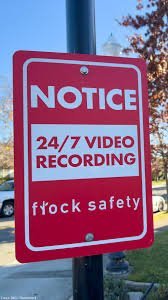
The Thin Line Between Public Safety and Mass Surveillance
In the modern era of urban security, the flock camera has become a ubiquitous sight on city streets. Marketed as a revolutionary tool for law enforcement to combat crime, Flock Safety operates a massive network of over 120,000 automatic license plate readers (ALPRs). However, beneath the promise of efficiency lies a growing storm of criticism regarding privacy, government overreach, and the erosion of civil liberties.
Recently, in response to overwhelming public opposition, Flock Safety announced several operational changes. While the company presents these as victories for privacy, civil rights advocates—including the ACLU—argue that these measures are more about public relations than actual protection.
The Data Retention Trap: One Week or Forever?
One of the most touted changes is the reduction of standard data retention from one month to just one week. On the surface, this seems like a win. However, the introduction of “Evidence Mode” complicates the narrative.
- n
- The Proposal: Data is deleted after seven days unless it is tied to a specific case number via Evidence Mode.
- The Concern: If Evidence Mode allows for the broad retention of any searched data, it could potentially create a loophole for indefinite storage, making the privacy problem even worse.
- The Gap: While a week is better than a month, experts suggest that a 48-hour window is the only way to truly protect innocent citizens from unnecessary tracking.
The Illusion of ‘Local Control’
Flock Safety claims that its new updates provide “more local control,” allowing specific cities to block certain types of searches (e.g., preventing immigration enforcement searches in specific jurisdictions). But is this system actually air-tight?
History suggests otherwise. Past attempts to restrict searches were easily bypassed. In one startling instance, officers discovered they could circumvent search-reason requirements by simply typing “investigation” or even “hehehe” into the system to gain access to data. Moving from a text box to a drop-down menu may offer a facade of security, but without independent verification, it remains a superficial fix.
Accountability or Window Dressing?
To combat the misuse of the flock camera system—where some officers have used the tech for personal stalking—Flock has made its “Audit Assistance” tool standard for all customers. The company points to an increase in identified misuse as proof that the tool works.
However, there is a critical flaw in this logic: without knowing the total number of violations, we cannot know the success rate. Whether the tool catches 5% or 95% of abusers remains a mystery. For true accountability, these systems require independent, third-party audits rather than internal company metrics.
The Bottom Line: Profit vs. Privacy
With nearly $1 billion in venture capital funding, Flock Safety is built on a business model that thrives on data collection. The tension between corporate profit and the fundamental right to privacy is palpable. As these surveillance networks expand, the question remains: are we trading our basic liberties for a curated sense of security?
For those interested in the intersection of technology and human rights, staying informed about how ALPR systems operate is the first step toward demanding stronger legislative protections. For more information on digital rights, you can visit the Privacy International resources.