
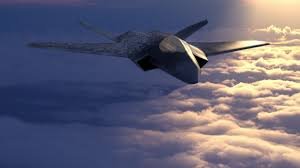
Europe’s Next-Gen Fighter Jet: Is the FCAS Still Relevant in the Drone Age?
The landscape of aerial warfare is shifting faster than ever. For years, the Future Combat Air System (FCAS)—known in France as SCAF—has been the crown jewel of European defence cooperation. However, recent geopolitical shifts are forcing a critical rethink of this ambitious aviation project.
During the recent Airbus Defence Summit in Manching, Germany, Airbus CEO Guillaume Faury dropped a bombshell: the current design of the FCAS is no longer valid. The reason? It was conceived in a time of peace, based on assumptions that the war in Ukraine has completely dismantled.
The Ukraine Factor: From Peacetime Design to Wartime Reality
The conflict in Ukraine has served as a brutal wake-up call for military strategists. The massive deployment of low-cost, high-impact drones has challenged the traditional supremacy of the manned fighter jet. According to Faury, the avion (aircraft) of the future cannot be built on outdated paradigms.
Experts are now questioning whether the traditional combat aircraft will remain the central pillar of air superiority or if it will transition into a supporting role for autonomous systems. This shift necessitates a total overhaul of the FCAS framework to ensure it remains effective by its projected 2040 deployment.
Industrial Rivalries: The Battle Between Airbus and Dassault
Beyond the technical challenges, the FCAS project is mired in a complex industrial tug-of-war. The project is caught between two giants:
- n
- Dassault Aviation: The French powerhouse that refuses to be a “minority leader” and is pushing for a change in governance.
- Airbus: Representing the interests of Germany and Spain, focusing on a more integrated European approach.
This friction has slowed progress, making the need for a redesign even more urgent. French President Emmanuel Macron is currently mediating to reconcile these industrial titans, aiming to present a united front against rising global threats.
What Exactly is the FCAS?
The FCAS isn’t just a single plane; it is a connected combat ecosystem. Designed to replace the current Rafale and Eurofighter fleets, it consists of three main components:
- A Next-Generation Fighter: A stealthy, highly advanced manned aircraft.
- Collaborative Drones: Unmanned aircraft that act as sensors and weapon platforms.
- A Digital Combat Cloud: A network that integrates data from space, air, and ground in real-time.
The Geopolitical Stakes for Europe
Launched in 2017 by Emmanuel Macron and Angela Merkel, and later joined by Spain, the FCAS is more than a piece of hardware—it is a symbol of European strategic autonomy. With a hostile Russia and an increasingly unpredictable US commitment to European security, the EU needs a cutting-edge defence capability to safeguard its borders.
The challenge now is to pivot quickly. If Europe cannot align its industrial goals with the realities of modern, drone-centric warfare, the FCAS risks becoming an obsolete relic before it even takes flight.



