The Great Cosmic Mystery: What is Dark Matter?
When we look up at the starry night sky, we see a vast expanse of glittering lights. However, science has revealed a startling truth: everything we can see—stars, planets, galaxies, and even ourselves—makes up only about 5% of the universe. The rest is composed of mysterious substances, the most prominent of which is dark matter.
But what exactly is dark matter, and why does it matter to us here on Earth? Let’s dive into one of the most captivating puzzles in modern astrophysics.
How Do We Know Dark Matter Exists?
Since dark matter does not emit, absorb, or reflect light, it is completely invisible to our traditional telescopes. We cannot “see” it in the conventional sense. So, how do scientists know it’s there? The answer lies in gravity.
Astronomers noticed a strange phenomenon: galaxies are rotating much faster than they should be. Based on the amount of visible matter (stars and gas), these galaxies should fly apart. There must be an invisible “glue” providing extra gravitational pull to keep them together. This unseen mass is what we call dark matter.
Key Evidence for Dark Matter:
- Galaxy Rotation Curves: Stars at the edges of galaxies move just as fast as those near the center.
- Gravitational Lensing: Massive clusters of dark matter bend light from distant galaxies, acting like a cosmic magnifying glass.
- Cosmic Microwave Background: Fluctuations in the afterglow of the Big Bang suggest a heavy presence of non-visible matter.
Dark Matter vs. Dark Energy: What’s the Difference?
It is common to confuse these two terms, but they play opposite roles in the evolution of the cosmos. While NASA and other space agencies continue to study both, here is the simplest way to distinguish them:
- Dark Matter: Acts as a cosmic “anchor.” It attracts matter through gravity and helps form galaxies.
- Dark Energy: Acts as a cosmic “expander.” It is a mysterious force that is pushing the universe apart at an accelerating rate.
The Quest for Detection
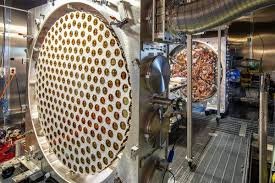
Finding the actual particle that makes up dark matter is the “Holy Grail” of modern physics. Many scientists believe it consists of WIMPs (Weakly Interacting Massive Particles)—particles that pass through ordinary matter without leaving a trace.
From deep underground laboratories to the massive particle accelerators at CERN, the global scientific community is utilizing cutting-edge technology to catch a glimpse of these elusive particles. Solving this mystery would not only rewrite our physics textbooks but also fundamentally change our understanding of time and space.
Final Thoughts
Dark matter reminds us that the universe is far more complex and mysterious than our senses suggest. While it remains invisible, its influence is felt in every corner of the cosmos, guiding the dance of galaxies and the destiny of the universe itself.
Stay tuned to the latest discoveries in astronomy and technology as we continue to peel back the layers of the cosmic veil.