Brendan Larsen: The Stunning Truth Behind the Viral Satellite Sky Photo
Art, AI, and the Night Sky: The Story of Brendan Larsen
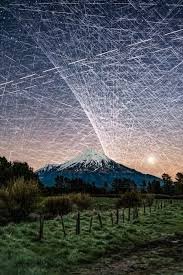
In an era where artificial intelligence can conjure almost any image imaginable, a photograph capturing thousands of satellites crisscrossing the night sky over New Zealand sparked a heated global debate. The image, captured by astrophotographer Brendan Larsen, became an overnight sensation, garnering millions of views. However, its otherworldly beauty led many to ask one critical question: Is this real, or is it AI?
The Gruelling Process Behind the Masterpiece
While skeptics were quick to dismiss the work as a digital fabrication, the reality is far more labor-intensive. To capture the scene over Mount Taranaki on the North Island, Larsen didn’t just press a button; he engaged in a meticulous exercise of patience and precision.
The technical breakdown of the project includes:
- n
- The Capture: Larsen spent two hours taking 578 individual photographs.
- The Settings: Each shot was an eight-second exposure with a two-second gap in between.
- The Post-Processing: An exhausting 40 hours spent in Adobe Photoshop layering the images.
- The Detail: He painstakingly erased stars to reveal the satellite trails, resulting in a final image featuring approximately 1,400 satellites and 14,000 trails.
The AI Controversy: A Double-Edged Sword
For Larsen, the viral success was a mix of triumph and frustration. While he gained 15,000 new followers, he also faced a wave of accusations that his work was generated by AI. “AI generating software is becoming so good it is becoming difficult to tell AI images from real images,” Larsen admits.
To combat these claims, Larsen documented his entire creative process on video. He wants viewers to understand that the image isn’t just a visual trick, but a documented reality of our changing atmosphere.
A Warning Written in the Stars
Beyond the technical achievement, the work of Brendan Larsen serves as a poignant commentary on satellite pollution. What looks like a shimmering web of light is, in reality, a growing concern for astronomers and environmentalists alike.
Currently, about 16,000 active satellites orbit Earth, accompanied by tens of thousands of pieces of space debris. According to reports from the United Nations Office for Outer Space Affairs (UNOOSA), the increase in space activity poses significant risks to ground safety and the purity of our astronomical observations.
“It’s interesting and fascinating seeing satellites, but it’s also disturbing,” says Larsen. “Nine out of 10 comments are like: ‘Wow, beautiful photo, but horrifying… concerning about what’s happening to the night sky.’”
Protecting Our Celestial Heritage
Larsen’s goal is to ignite a global conversation. By visualizing the invisible congestion of our orbit, he hopes to build a groundswell of support for the responsible use of space technology. The beauty of the image is the hook, but the message is clear: we must protect the darkness of the night sky for future generations.
Whether you view it as a piece of modern art or a scientific warning, the work of Brendan Larsen reminds us that the boundary between technology and nature is becoming increasingly blurred.
📰 You May Also Like