Beyond the Horizon: The Future of Visual Tech Where You Can See Everything
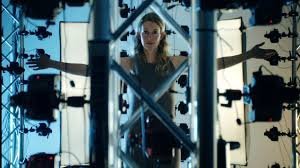
The Dawn of Absolute Clarity: Redefining How We Perceive the World
For centuries, human vision has been limited by the biological constraints of the eye and the physical barriers of our environment. However, we are entering a transformative era of visual technology. Imagine a world where the boundaries between the seen and the unseen vanish—a reality where, effectively, you can see everything.
From the depths of the ocean to the furthest reaches of the cosmos, and even into the microscopic structures of our own DNA, technology is amplifying our sight in ways that were once reserved for science fiction. But what exactly is driving this revolution?
The Power of AI and Hyper-Resolution
The cornerstone of this visual leap is the integration of Artificial Intelligence (AI) with high-resolution imaging. We are no longer just capturing light; we are reconstructing reality. Through computational photography and AI-driven upscaling, images that were once blurry or obscured are now crystal clear.
- n
- Neural Radiance Fields (NeRFs): This technology allows AI to turn a few 2D photos into a fully navigable 3D scene, ensuring that no detail is missed.
- 8K and Beyond: The push toward ultra-high-definition displays means the pixel is becoming invisible, creating an immersive experience where the screen disappears.
- Enhanced Medical Imaging: In healthcare, AI-powered scans now allow doctors to detect anomalies with surgical precision, meaning that in a clinical setting, you can see everything that could possibly affect a patient’s health.
Breaking Physical Barriers with AR and VR
Augmented Reality (AR) and Virtual Reality (VR) are not just for gaming anymore. They are tools for total transparency. By overlaying digital information onto the physical world, AR allows professionals—from architects to surgeons—to see “through” walls or skin in real-time.
When you combine a high-end VR headset with real-time data feeds from satellites or drones, the perspective shifts. You are no longer limited to a single vantage point; you gain a god-like view of the environment. Whether it’s monitoring a city’s traffic flow or exploring a remote archaeological site in Canada, these tools ensure that the full picture is always available.
The Ethics of Total Visibility
While the ability to see everything offers unparalleled advantages in science and safety, it also brings significant ethical challenges. The line between innovation and intrusion is thin. As surveillance technology evolves and AI becomes more capable of facial recognition and predictive tracking, society must decide where the limit of “seeing everything” should lie.
Privacy advocates argue that the right to remain unseen is fundamental to human freedom. As we integrate these technologies into our daily lives, the focus must shift toward transparent governance and strict data protection laws to ensure that visibility does not equal vulnerability.
Conclusion: A New Window to the Universe
The journey toward a world where you can see everything is not just about better lenses or faster processors; it is about expanding the horizon of human knowledge. By leveraging the power of advanced computing and innovative optics, we are uncovering the hidden layers of our existence.
As we move forward, the goal is to use this absolute clarity to build a safer, healthier, and more connected world. The future is wide open, and for the first time, we have the tools to see it all.
📰 You May Also Like