World Cup MVP: Everything You Need to Know About the Golden Ball Award
In the high-stakes world of international football, few honors are as coveted as the World Cup MVP title. While lifting the trophy is the ultimate team achievement, the Golden Ball serves as the definitive recognition of individual brilliance on the global stage.
As we look ahead to the next clash of titans, with Argentina aiming for glory and Spain maintaining their formidable unbeaten streak, the debate over who will be the next individual superstar to claim this prize is already heating up.
What Exactly is the Golden Ball?
The Golden Ball is the official award presented to the best player of each FIFA World Cup. First introduced during the 1982 tournament—where Italy’s Paolo Rossi became the inaugural winner—this trophy distinguishes the player who had the most significant impact on the game throughout the competition.
It is crucial not to confuse the Golden Ball with the Golden Boot. While the Golden Boot is a purely statistical achievement awarded to the tournament’s top goalscorer, the Golden Ball is about overall influence, skill, and leadership.
- n
- Golden Ball: Best overall player (Subjective/Technical).
- Golden Boot: Top goalscorer (Objective/Statistical).
Interestingly, only two players in history—Paolo Rossi (1982) and Salvatore ‘Toto’ Schillaci (1990)—have managed to sweep both awards in a single tournament.
How is the World Cup MVP Decided?
Unlike the Golden Boot, which is decided by a simple tally of goals, the World Cup MVP is determined through a more complex and subjective process. The decision rests with FIFA’s Technical Study Group (TSG).
Currently led by the renowned former Arsenal manager Arsene Wenger, the TSG is a rotating panel of experts, including:
- n
- Former professional players.
- Elite-level coaches.
- Technical directors.
- Expert soccer analysts.
The TSG doesn’t just watch the games; they dive deep into performance data, tactical patterns, and set-piece efficiency. They analyze every match to identify key trends, which are later compiled into FIFA’s Technical Reports. From this rigorous analysis, a shortlist is created to select the Golden, Silver, and Bronze Ball winners.
The Unrivaled Legacy of Lionel Messi
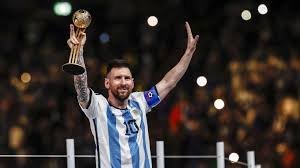
When discussing the World Cup MVP, one name stands above the rest: Lionel Messi. The Argentine maestro has achieved a feat no other player in history has matched—winning the Golden Ball twice (2014 and 2022).
Messi’s journey highlights a curious trend in the award’s history: it is often given as a “consolation prize” to players on the losing side of the final. In fact, five players from beaten finalists have won the Golden Ball, compared to only four tournament winners. Messi, however, broke this mold by winning the award in 2022 while leading Argentina to the championship, echoing the success of Romario in 1994.
Historical List of Golden Ball Winners
From the tactical mastery of Zinedine Zidane to the goalkeeping brilliance of Oliver Kahn, here are the official winners of the World Cup’s most prestigious individual award:
| Year | Player | Country |
|---|---|---|
| 1982 | Paolo Rossi | Italy |
| 1986 | Diego Maradona | Argentina |
| 1990 | Salvatore Schillaci | Italy |
| 1994 | Romario | Brazil |
| 1998 | Ronaldo | Brazil |
| 2002 | Oliver Kahn | Germany |
| 2006 | Zinedine Zidane | France |
| 2010 | Diego Forlan | Uruguay |
| 2014 | Lionel Messi | Argentina |
| 2018 | Luka Modric | Croatia |
| 2022 | Lionel Messi | Argentina |
As the football world looks toward the future, the quest for the next World Cup MVP continues. Will a new legend emerge, or will the existing giants continue to redefine the game?