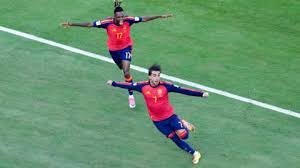
The Ultimate Showdown: A Clash of Eras in the World Cup Final
As football fans across the globe search for World Cup matches today, all eyes are fixed on a historic encounter that feels like a script written by destiny. The World Cup final brings together two titans of the sport: the timeless legend Lionel Messi and the explosive young talent Lamine Yamal.
This isn’t just a game; it’s a symbolic passing of the torch. With Messi at 39 and Yamal at just 19, the match between Argentina and Spain represents the beautiful game’s endurance and its future. Watching the veteran maestro face his successor in the same position on the wing is a “true miracle of fate” that defines the magic of the FIFA World Cup.
Fighting the Digital Battle: FIFA’s War on Online Abuse
Beyond the pitch, a silent war is being fought against toxicity. FIFA has revealed staggering statistics regarding its social media protection service. During this tournament, the system flagged over seven million posts containing potentially harmful or abusive content.
- Exponential Increase: Detection rates have jumped 14-fold compared to the 2022 edition.
- AI Integration: Artificial intelligence helped review over 500,000 targeted messages.
- Law Enforcement: More than 1,000 serious threats were reported to legal authorities.
Alarmingly, racist abuse accounted for approximately 11% of all flagged messages, highlighting the urgent need for a safer digital environment for athletes and officials.
Politics and Integrity: The “Third Half” of the Game
While the world celebrates, the Council of Europe has raised serious red flags. Secretary General Alan Perceval has called for a “third half”—a concerted effort to shield football from financial and political pressures.
Controversy has sparked over the perceived influence of political leaders on refereeing decisions, specifically citing the unexplained suspension of a red card for American player Folarin Balogun. Perceval warned that political leverage and the rise of aggressive betting—where every single corner or card is wagered upon—threaten the very integrity of the sport.
The Evolution of the Tournament: Expansion and Legacy
Despite the debate, Arsène Wenger, FIFA’s Director of Global Football Development, maintains that expanding the World Cup from 32 to 48 teams was an ethical necessity. By opening doors to more nations, the tournament has achieved a level of global inclusivity and success that justifies the initial skepticism.
As we look forward, we remember the ghosts of greatness. Only one man, the legendary Vittorio Pozzo, has managed to win the World Cup twice as a coach (1934 and 1938). His philosophy of “conscience, faith, and stubbornness” remains a blueprint for any manager dreaming of hoisting the trophy today.
Are you ready for the final? Who will claim glory—the legend or the prodigy? Let us know in the comments!