The Legendary ‘Game’ Returns to Glory: Ivy League Football Charges Towards the Playoffs
For a century and a half, it’s simply been known as “The Game.” The storied football rivalry between Harvard and Yale is older than most collegiate football programs themselves, predating powerhouses like Alabama and Georgia. Yet, for decades, these titans of academia and athletics have been conspicuously absent from postseason play. This year, that all changes, marking a pivotal moment for Ivy League football.
This Saturday, when the Crimson and the Bulldogs clash, the stakes will be higher than they’ve been in generations. The winner of the Harvard-Yale game will punch their ticket to the playoffs, a groundbreaking development that concludes a self-imposed ban dating back to World War II.
A Legacy Reimagined: The Ivy League’s Return to Postseason Play
The eight prestigious institutions that comprise the Ivy League – including Harvard and Yale – deliberately opted out of postseason competition for decades. Their primary motivation? To resist the escalating commercialization of college football. This stance protected the amateur spirit of their athletics, but also sidelined them from national championship pursuits.
However, the winds of change have swept through the Ivy League, largely driven by its own students. A powerful movement from student-athletes advocated for the right to compete at the highest level, culminating in the league’s decision to lift the postseason ban this past offseason. This shift reflects a broader evolution in college sports, as student-athletes increasingly influence policy, especially with the advent of Name, Image, and Likeness (NIL) opportunities, further highlighting the evolving landscape of amateur athletics. For more on how NIL is shaping college sports, visit the NCAA’s NIL page.
Understanding the Playoff Landscape: FCS vs. FBS
It’s important to clarify the context of these playoffs. We’re not discussing the Football Bowl Subdivision (FBS) playoffs that feature teams like Ohio State or Notre Dame. Instead, the Harvard-Yale victor will join the Football Championship Subdivision (FCS) playoffs. While the FCS is a tier below the FBS, it represents an incredibly competitive and passionate division of college football, rich with history and fierce rivalries. To learn more about the FCS, check out the official NCAA FCS website.
Despite the distinction, the significance of this moment for Ivy League sports and the two historic programs cannot be overstated. The return to postseason play injects a new level of excitement and purpose into an already legendary rivalry.
‘The Game’: A Rivalry Forged in History and Excellence
The Harvard-Yale rivalry isn’t just old; it’s foundational to modern college football. First played in 1875, it was among the earliest contests under rules resembling today’s game. In fact, Yale holds more college football national titles than any other team, two more than Alabama, while Harvard ranks eighth on the all-time list! The influence of these Ivy League programs in shaping the sport we know today is undeniable, even if they transitioned out of college football’s top division in the early 1980s.
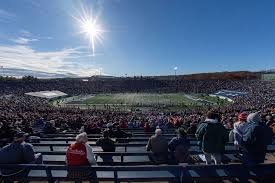
The history is palpable, but so is the contemporary interest. Average attendance for Harvard-Yale games at the iconic Yale Bowl frequently reaches 50,000, a figure that surpasses the average attendance of many Major League Baseball teams. This testifies to the enduring cultural cachet and passionate following of this academic and athletic showdown.
Beyond the field, ‘The Game’ has cemented its place in popular culture, even serving as a backdrop for memorable moments, such as kicking off one of the greatest episodes of The Simpsons, “Burns, Baby Burns.” This blend of athletic prowess, academic prestige, and cultural significance makes it unique.
The Road to Victory: Harvard vs. Yale – A Statistical Showdown
This year’s edition promises to be a thrilling encounter. Harvard enters the matchup ranked 10th in the FCS (out of 129 teams), boasting an undefeated record. Their dominance is evident in their national rankings: seventh in scoring offense and third in scoring defense, with an average winning margin exceeding 25 points per game.
Yale, not to be outdone, stands at 25th in the FCS, having lost only a single game. Their formidable defense, ranked sixth nationally in points allowed, has been a cornerstone of their success, leading to double-digit average winning margins.
Recent history further suggests a tightly contested affair. The last five meetings between these two squads have been decided by a touchdown or less, indicating a pattern of intense, down-to-the-wire finishes.
With the Ivy League championship and an automatic playoff bid on the line, this year’s ‘Game’ transcends mere rivalry. The victor will make history, while the loser will face the anxious wait for a potential at-large bid. It’s a testament to student agency, historical resilience, and the enduring appeal of collegiate athletics at its finest. Don’t miss this landmark event in college football playoffs history!