The Indiana Way: How Curt Cignetti Redefined Success in College Football
In the world of college football, some transformations are gradual, and others are seismic. The rise of Curt Cignetti at Indiana University is undoubtedly the latter. In just two years, Cignetti took a program historically labeled as the ‘losingest’ in college football and catapulted it to a national championship with a stunning 16-0 record.
But as the dust settles on this historic run, a heated debate has emerged among the elite coaching circles: Is the “Indiana Way” a sustainable blueprint for success, or a strategic gamble with the schedule?
What Exactly is the “Indiana Way”?
Curt Cignetti didn’t follow the traditional slow-build approach. Instead, he implemented a high-velocity strategy focused on immediate impact. The “Indiana Way” is characterized by several unconventional pillars:
- n
- Aggressive Talent Acquisition: A heavy reliance on transfers and veteran players, including sixth-year seniors, to build an experienced roster instantly.
- Culture of Confidence: Establishing a dominant practice environment that translates into on-field aggression.
- Strategic Scheduling: Prioritizing wins over “strength of schedule” in the non-conference slate to build momentum and team morale.
This approach yielded immediate results. The Hoosiers dominated early opponents like FIU and Charlotte with an average margin of victory exceeding 45 points, creating a psychological edge that carried them through a grueling Big Ten schedule.
The Sarkisian Perspective: Genius or Gamble?
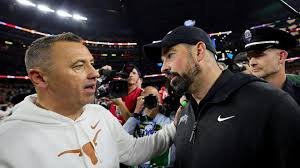
Texas head coach Steve Sarkisian recently shared his thoughts on the “Always College Football Podcast” with ESPN’s Greg McElroy. While Sarkisian was quick to praise Cignetti—calling his work “unbelievable”—he issued a cautionary warning to other coaches attempting to emulate the strategy.
Sarkisian pointed out that while many want to adopt the success of the Indiana model, they often forget the critical role of the schedule. By playing easier games early in the season, Cignetti ensured his team remained “happy” and confident heading into conference play. For coaches facing 10+ Power Four opponents, the margin for error is much slimmer.
Strength of Schedule vs. The Win Column
The debate centers on a fundamental shift in how the College Football Playoff (CFP) committee views teams. Traditionally, a “strength of schedule” (SOS) was paramount. However, Cignetti’s 16-0 run proved that a high win total—regardless of early opponents—creates a narrative of invincibility that is hard for committees to ignore.
Sarkisian’s concerns are likely rooted in his own reality. With Texas facing a brutal 2026 schedule, including a return game against Ohio State and a gauntlet of SEC opponents, the luxury of “momentum-building” wins is non-existent. In the high-stakes environment of the SEC, every loss is magnified, making the “Indiana Way” a difficult model to replicate for teams already in the spotlight.
The Bottom Line
Whether you view it as strategic brilliance or schedule manipulation, you cannot argue with the results. Curt Cignetti has proven that the old rules of “building a program” are being rewritten. By blending veteran talent with a calculated approach to scheduling, he didn’t just win games—he changed the conversation about how to reach the mountaintop in college football.
For the rest of the coaching world, the lesson is clear: the path to the CFP is no longer linear. Sometimes, the most unconventional route is the fastest way to a championship.