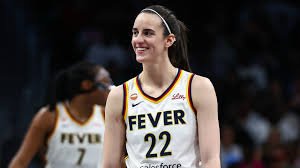
The Unstoppable Rise of the ‘Caitlin Clark Effect’
The WNBA is experiencing a seismic shift in popularity, and at the center of this storm is one name: Caitlin Clark. While the league has always had talented athletes, the current surge in Caitlin Clark television ratings is something entirely unprecedented, turning every Indiana Fever game into a must-watch television event.
Recently, the league witnessed a milestone that defies conventional sports broadcasting logic. A Wednesday night game against the Los Angeles Sparks, airing at 10 p.m. ET—a notoriously difficult time slot—managed to draw an average audience of 1.04 million viewers. For a game airing solely on cable (USA Network and CNBC), this is a staggering achievement.
Breaking the Glass Ceiling of Cable Viewership
To understand why this number is so significant, one must look at the historical context of the WNBA. Before Clark’s arrival, the league went nearly 16 years without a single game averaging a million viewers. The previous benchmark was set back in 2008 during Candace Parker’s professional debut, but that occurred on a Saturday afternoon on a major broadcast network.
Comparing the two shows a massive evolution in fan engagement. Clark isn’t just drawing crowds during primetime weekend showcases; she is pulling seven-figure audiences on a random weeknight on cable. According to data from Nielsen, this specific Fever-Sparks matchup was the network’s most-watched WNBA game on record, representing a 149% increase compared to the 2025 cable average.
Beyond the Numbers: The Indiana Fever as a Powerhouse Brand
The impact of Clark extends beyond her own playing time. While the most massive ratings have come from her presence—such as the 2.56 million viewers for the game against the New York Liberty on CBS—the Indiana Fever have now become a destination brand in their own right.
- n
- The Halo Effect: On July 5, a Fever game against the Las Vegas Aces averaged 1.55 million viewers on ESPN, even without Clark on the court.
- Comparative Growth: Non-Fever games, while growing, still trail significantly. For instance, games featuring the Liberty and Sparks without the Fever drew under 800,000 viewers.
- Brand Loyalty: This suggests that Clark has built such a massive interest in the Fever that fans are now invested in the team’s journey as a whole.
A League in Transition
There is an ongoing narrative within the WNBA and its media partners to frame this boom as a general rise in the popularity of women’s basketball. While it is true that the league is in a healthier position than ever before, the data consistently points to a specific catalyst.
Whether it is the controversy surrounding her reception in the league or her sheer skill on the court, Clark has become the primary driver of visibility. The Caitlin Clark television ratings aren’t just numbers; they are a testament to her ability to move the needle for an entire sport.
Final Thoughts
As the WNBA continues to expand—including plans to extend the regular season to 50 games by 2027—the “Clark Effect” will likely remain the blueprint for growth. The league has found a superstar who can transcend the sport, turning late-night cable games into historic media events and ensuring that the world is finally watching.