The Delicate Balance of NBA Coaching: Knowing When to Step Back
In the high-pressure world of professional basketball, the role of a head coach is often seen as the ultimate strategist—the mastermind calling every play and adjusting every tactic. Whether it is the Knicks coach managing a gritty New York roster or a veteran strategist leading a Western Conference powerhouse, the challenge remains the same: How do you manage a superstar in the zone?
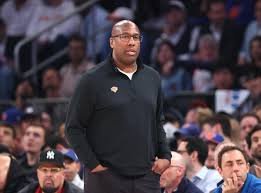
A legendary example of this balancing act comes from Mike Brown. While Brown has had a storied career, one of his most profound coaching moments didn’t involve a complex play call, but rather the decision to say absolutely nothing.
The Night LeBron James Became Unstoppable
Flashback to 2007. The NBA was a different beast, and scoring was a premium. During a historic Game 5 showdown against the Detroit Pistons, LeBron James did something that left the basketball world speechless: he reeled off 25 consecutive points.
For most coaches, a timeout during such a streak would be the time to provide instructions, draw up a specific play, or offer tactical adjustments. But Mike Brown, coaching the Cavaliers at the time, took a different approach. He recognized a phenomenon that every great NBA coach dreams of witnessing: total athletic synchronicity.
The Philosophy of “Letting Him Cook”
Brown recalls a pivotal moment in the huddle where his assistant coaches were eager to intervene. They wanted to guide LeBron, to give him a roadmap for the next few possessions. Brown’s response was legendary in its simplicity:
“There’s no way in hell I’m going in that huddle to tell him anything right now the way he’s cooking. I’m just gonna let him cook. I’m not saying anything to him.”
By resisting the urge to over-coach, Brown allowed LeBron to maintain his flow state. The result? A jaw-dropping performance that secured a victory and etched itself into NBA lore. Brown later described it as having “the best seat in the house.”
Key Takeaways for Modern Basketball Strategy
This anecdote provides a timeless lesson for anyone analyzing the performance of a Knicks coach or any leader in the league. Great coaching isn’t always about adding more; sometimes, it’s about knowing what to remove.
- Trust Your Talent: When a player is performing at a peak level, over-managing can disrupt their rhythm.
- Emotional Intelligence: Recognizing the “flow state” is just as important as knowing the X’s and O’s.
- The Courage of Silence: It takes a confident coach to stay silent when the staff is pushing for a tactical change.
For more insights into historic playoff performances and player statistics, you can visit NBA.com or explore deep-dive analytics at Basketball-Reference.
Ultimately, the brilliance of Mike Brown’s strategy in 2007 serves as a reminder that the best coaches aren’t just tacticians—they are observers who know exactly when to get out of the way of greatness.