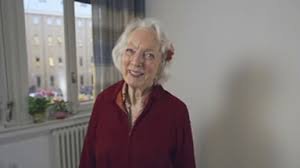
Tenley Albright: A Legacy of Gold and Resilience
Tenley Albright’s name is synonymous with grace, determination, and groundbreaking achievement in the world of figure skating. Her 1956 Olympic gold medal wasn’t just a victory for the United States; it marked a pivotal moment in the sport’s history, as it was the last time Olympic figure skating was held outdoors. Imagine spectators bundled up, the crunch of crystallized ice under blades, and the sun casting shadows as Albright launched into her routines – a scene vastly different from the modern, indoor arenas we know today.
From Outdoor Rinks to Olympic Glory
Albright, now 90, has witnessed a remarkable evolution of figure skating. “Back then, I literally could not have imagined what we saw this week,” she remarked after observing the U.S. Figure Skating Championships. The athleticism on display today, with skaters like Amber Glenn and Alysa Liu mastering triple Axels, is a testament to the sport’s progress. The introduction of the quadruple Axel by Ilia Malinin further exemplifies this shift.
The training methodologies have also undergone a dramatic transformation. Albright recalls a simpler approach: “I remember the coaches would say, ‘Well, that was pretty good. Now do that again and go higher.’” Today, coaching is deeply rooted in technology, biomechanics, and detailed analysis.
Overcoming Adversity: Polio and Perseverance
Albright’s path to Olympic success wasn’t without obstacles. At the age of 11, she contracted polio, a debilitating illness that threatened her physical abilities. Doctors encouraged her to regain strength through activities she enjoyed, and she instinctively returned to the ice. “I had the experience of not being able to use my muscles at a time when there wasn’t any treatment,” she recalled, “and they weren’t even clear about how it was spread.” Through visualization and sheer willpower, she rebuilt her strength and reignited her passion for skating.
Early training wasn’t glamorous. She skated in the mornings at the Boston Skating Club, often alongside mice and remnants from the previous night’s hockey game. But she embraced the incremental progress: “That’s the wonderful thing about skating: It’s like a ladder, you learn one simple thing…and then you’re allowed to learn the next thing.”
Beyond the Ice: A Career in Medicine
After achieving Olympic gold in Cortina d’Ampezzo (a return to the location for the 2026 Winter Games) and securing two World Championships, Albright embarked on a second remarkable career – medicine. She graduated from Harvard Medical School in 1961 and dedicated decades to practicing as a surgeon. She also shared her love of skating with her family, introducing her children and grandchildren to the sport.
A Lasting Impact and the Spirit of the Olympics
Albright remains a beloved figure in the figure skating community, frequently attending competitions and inspiring new generations of athletes. She emphasizes the unifying power of the Olympics: “What I’ve always loved about the Olympics is you just suddenly are overwhelmed by the fact that people are not speaking your language…but you’re all there for the same reason.”
She’s particularly encouraged by the camaraderie among the current U.S. women’s team – Amber Glenn, Alysa Liu, and Isabeau Levito, affectionately known as the “Blade Angels.” Albright recalls struggling with competition against friends, and appreciates their modern approach: “We go out and do our job,” Glenn recently stated, “and the judges’ scores are none of our business.”
Tenley Albright’s story is a testament to the enduring spirit of the Olympics and the power of perseverance. As she herself puts it, “Once a skater, always a skater.” And even after 70 years, she still dreams of jumping.
Source: NBC Olympics