Beyond the Monday Night Football Schedule: The Evolution of How We Watch the NFL
Every NFL season, millions of fans scramble to check the Monday Night Football schedule to ensure they don’t miss a second of the gridiron action. But in recent years, the conversation has shifted from who is playing to how we are watching. The rise of the “altcast”—alternate broadcasts designed to offer a fresh perspective—changed the game. But as we move further into 2026, a critical question arises: Do these experiments still hold value, or was the novelty just a pandemic-era trend?
The Quest for Production Perfection
For two decades, ESPN has owned the Monday Night Football brand, yet the journey to a “gold standard” production has been rocky. While competitors like Fox and CBS established legendary booths, ESPN often struggled to find its identity. The appointment of 12-time Emmy winner Artie Kempner as director marked a pivotal shift, signaling that ESPN was finally ready to prioritize a polished, high-end game presentation.
The ManningCast: A Bold Experiment in Sports Media
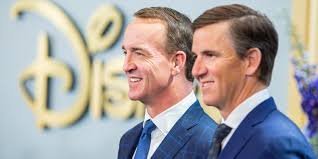
In September 2021, the world met the ManningCast. Featuring brothers Peyton and Eli Manning, this broadcast was a hybrid of tactical analysis and a late-night talk show. It was a breath of fresh air, peaking at nearly two million viewers during its early stages. It proved that fans wanted a more relaxed, personality-driven way to consume the games listed on the Monday Night Football schedule.
However, the luster has begun to fade. With the arrival of broadcasting heavyweights Joe Buck and Troy Aikman to the main ESPN feed, the need for an “alternative” has diminished. When the primary broadcast offers elite star power and professional polish, the charm of a casual chat between brothers starts to lose its draw.
The “Era of Personality” and the Pat McAfee Factor
We are currently living in the era of the personality. This is evident in the massive influence of figures like Pat McAfee. ESPN’s strategy has pivoted toward leveraging charisma to drive viewership, exploring new McAfee-led presentations to fill the gaps when the Mannings are away.
- Charisma vs. Content: Does a big name guarantee a big audience?
- Platform Shift: With YouTube and social media, fans can already “hang out” with creators; do they need it during the game?
- The Core Value: Ultimately, the drama is created by the athletes, not the commentators.
Substance Over Novelty: The Future of Broadcasting
The pandemic forced media companies to innovate out of necessity. Altcasts were a brilliant way to engage a home-bound audience. But as sports return to a traditional rhythm, the industry is realizing a timeless truth: Innovation captures attention, but substance sustains it.
Whether it’s the energy of Gus Johnson or the seasoned delivery of Al Michaels, the goal remains the same: providing a reason to care about the game. When the matchup is a blowout, no amount of “personality” can mask a lack of competitiveness. The most successful broadcasts are those that enhance the game without distracting from it.
Final Thoughts
As you mark your calendar with the latest Monday Night Football schedule, consider how your viewing habits have changed. While the ManningCast and McAfee’s Field Pass offered a glimpse into a new world, the return to professional, high-stakes announcing suggests that the “classic” way of calling a game is still king.