Money vs. Success: A Deep Dive into MLB Payrolls 2026
In the world of professional sports, there is a long-standing belief that the team with the deepest pockets eventually lifts the trophy. However, the MLB payrolls 2026 season has completely shattered that myth. While some franchises treated the transfer market like a shopping spree, others proved that strategic drafting and player development are far more valuable than a massive bank account.
The High Cost of Failure: The Big Spenders
For several powerhouse teams, 2026 was a lesson in diminishing returns. Huge investments did not translate into postseason glory, leading many to question the efficiency of their front-office strategies. Here are the teams that spent the most but saw the least return on investment:
- n
- New York Yankees: With a staggering payroll of $356,254,519, the Bronx Bombers were swept by the Rays in the ALDS.
- New York Mets: Spending $353,958,676 didn’t save them from finishing last in the N.L. East.
- Philadelphia Phillies: Despite a $340,959,718 investment, they were knocked out early by the Braves.
- Toronto Blue Jays: After a strong previous year, their $306,046,914 payroll resulted in a last-place finish in the A.L. East.
The Efficiency Kings: Cleveland Guardians and Tampa Bay Rays
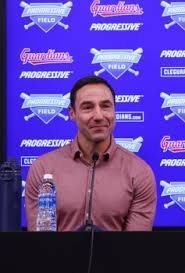
On the opposite end of the spectrum, the Cleveland Guardians provided a masterclass in financial management. With the lowest payroll in the league at just $91,097,295, they didn’t just compete—they dominated. The Guardians secured their third consecutive Central Division title and pushed their opponents to the limit in a winner-take-all Game 5 of the ALDS.
The Major League Baseball landscape also saw the Tampa Bay Rays continue their tradition of efficiency. Ranking 26th in payroll ($128,747,544), the Rays managed the best record in the American League (98-64), proving that a smart approach to the game can outperform a budget that is $225 million larger.
The Blueprint: Draft, Develop, and Win
How does a team like the Guardians succeed with a fraction of the budget? The answer lies in their commitment to the draft and development pipeline. Rather than buying established stars, they build them. Key home-grown talents include:
- n
- Pitching Core: Gavin Williams, Parker Messick, Tanner Bibee, and closer Cade Smith.
- Field Stars: Steven Kwan, Chase DeLauter, and second baseman Travis Bazzana.
- The Foundation: Jose Ramirez, who signed as a teenager in 2009 for a modest $50,000 bonus.
The Looming Battle: Salary Caps and Lockouts
The disparity in MLB payrolls 2026 has accelerated the debate over financial regulation in baseball. As the current Collective Bargaining Agreement (CBA) expires on December 1, a collision course is inevitable between owners and players.
MLB owners are aggressively pushing for a salary cap and, more controversially, a salary cap floor of $171.2 million starting in 2027. For teams like the Guardians, this would be a seismic shift, forcing them to add roughly $80 million to their payroll just to meet the minimum requirement.
With players refusing to accept a cap on their earnings, the sport is currently bracing for a potential lockout, which could delay the start of the next season.
Final Thoughts
The 2026 season serves as a reminder that while money can buy talent, it cannot buy chemistry, scouting intuition, or a winning culture. As we head into a period of financial uncertainty, the Guardians and Rays have provided the blueprint for the future of sustainable success in baseball.