World Cup Turmoil: Red Cards, Political Influence, and the Road to the Quarter-Finals
The atmosphere of the World Cup has reached a boiling point, not just because of the action on the pitch, but due to off-field controversies that are shaking the foundations of football’s governing body. While the global spotlight often falls on the rivalry and tension of Mexico vs USA as co-hosts, a new drama has emerged involving England, a controversial red card, and an unprecedented political intervention.
The Quansah Crisis: England’s Bitter-Sweet Victory
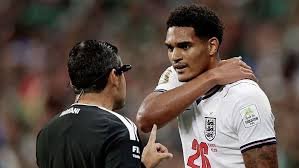
England secured a hard-fought 3-2 victory over Mexico, but the win came at a cost. Defender Jarell Quansah was sent off in the 54th minute following a high challenge on Jesus Gallardo. Classified as “serious foul play,” the Bayer Leverkusen defender is now staring down a potential two-game ban.
For England manager Thomas Tuchel, this is a strategic nightmare. The right-back position has been a revolving door throughout the tournament. With Reece James sidelined with a hamstring injury, Tuchel has been forced to experiment with various players, including Declan Rice and John Stones, to plug the gap.
The “Trump Precedent”: A Game-Changer for the USA?
The Football Association (FA) is now considering an appeal for Quansah, inspired by a shocking event involving the United States. In a move that has left the football world stunned, US striker Folarin Balogun had a red card suspension effectively suspended after an intervention by US President Donald Trump.
Trump reportedly urged FIFA to review Balogun’s suspension following a foul on Bosnia-Herzegovina’s Tarik Muharemovic. In a twist that defies standard protocol, FIFA invoked Article 27—a clause that allows the organization to make discretionary decisions without meeting standard criteria.
Why Article 27 is Sparking Global Outrage
- n
- Unprecedented Use: This clause had never been used at a World Cup until now.
- Lack of Intent: The US argued the foul was accidental, despite football laws stating that only the result of the challenge matters, not the intent.
- European Backlash: Thomas Tuchel and the Belgian national team have voiced strong criticism, fearing that political power is now outweighing sporting regulations.
This decision has opened the floodgates. Reports suggest that France is already challenging Michael Olise’s yellow card, hoping to capitalize on the precedent set for the US team.
What Lies Ahead for England?
As the drama unfolds, England prepares to face Norway in the quarter-finals in Miami this Saturday. The return of Reece James is expected, which may alleviate some of the defensive pressure, but the uncertainty surrounding Quansah’s availability remains a key talking point.
Whether this is a new era of “flexible” officiating or a temporary lapse in FIFA’s judgment, one thing is certain: the intersection of sports and politics has made this World Cup one of the most controversial in history.