Ice Hockey Olympics: A Unique Bond Between the US and Canada
American hockey fans possess a unique understanding and appreciation for Canada, born from a shared love for the game. This connection transcends mere competition, especially during the intensity of the Olympic Winter Games. It’s a relationship built on respect, rivalry, and a mutual passion for the fastest game on ice.
I recall a time teaching songwriting at Colorado College. One student, a lacrosse scholarship recipient, dedicated all his songs to the Denver Broncos. When I suggested exploring other themes, he explained, with a shrug, that he was simply having fun. He became a favourite student, and every Broncos victory reminds me of his creative pursuit of rhymes for “Elway.” This anecdote highlights how deeply ingrained sports can be in our identities, and how those passions can shape our perspectives.
Beyond the Scoreboard: A Cultural Connection
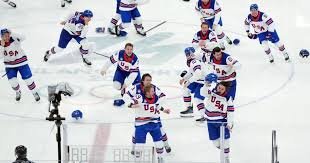
The Olympics, and athletic competitions in general, often reveal underlying cultural narratives. The recent nail-biting victories between the US and Canada in ice hockey prompted reflection. It was a challenge to separate the sporting achievement from political considerations, but ultimately, the shared love of the game prevailed. Like many, I found myself celebrating the American team’s success with a sense of genuine admiration.
For many American fans, goals scored by players like Megan Keller and Jack Hughes weren’t just points on the scoreboard; they were the culmination of a lifetime dedicated to a sport often misunderstood by those around them. It’s a feeling echoed by those who’ve always championed hockey in a country where it isn’t the dominant sport.
At Colorado College, Dean of Mathematics Mike Siddoway was a passionate hockey enthusiast, constantly referencing obscure players and their connections to Canadian teams. He even kept a quote of mine from USA Today – “God bless the lugers and the bobsledders, but at the end of the day, the Olympics is a hockey tournament” – taped to his fridge. This illustrates the profound impact the sport has on individuals, regardless of their profession.
An Outsider’s Perspective
Conversations with American sports journalists like Jeff Z Klein, the late Marc Nathan, and NHL media director Stu Hackl revealed a fascinating perspective. They spoke of feeling like outsiders in the Canadian hockey world, a sentiment I hadn’t previously considered. Their experiences in the 70s, 80s, and 90s mirrored my own as a writer seeking unique hockey stories beyond North American rinks.
For years, southern hockey culture faced skepticism. Americans had to consistently prove themselves to earn respect, despite the iconic “Miracle on Ice” victory in 1980, which some Canadians attributed to Soviet overconfidence rather than American skill. Regardless of the political climate, the hard-earned celebrations were always meaningful.
A Shared Passion, Despite Differences
One late night in the 1980s, I encountered two American fans in Sabres jerseys at a 24-hour doughnut shop in Toronto. They’d missed their bus home after a game and engaged me in a detailed discussion about Canadian hockey towns like Timmins, Ontario, and Rouyn-Noranda, Quebec. Their knowledge of Canadian geography, fueled by their love for the game, was remarkable. This encounter perfectly encapsulates the deep connection between American and Canadian hockey fans.
It can be challenging to overlook the antics of players like Brad Tkachuk or the political views of others. However, as Canadians, we should recognize and appreciate the unwavering passion for our game, even when it means facing defeat. The rivalry is fierce, but the underlying respect is undeniable.
The ice hockey competition at the Olympics is more than just a sporting event; it’s a celebration of a shared passion that unites fans on both sides of the border. It’s a testament to the power of sport to transcend political boundaries and foster a unique cultural connection.