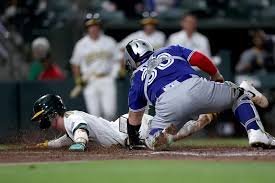
Henry Bolte Analysis: Decoding the Blue Jays’ Playoff Push and Pitching Paradoxes
In the high-stakes environment of Major League Baseball, the term ‘must-win’ is thrown around with alarming frequency. Recently, the narrative surrounding the Toronto Blue Jays has been dominated by this phrase, but as Henry Bolte points out, the math doesn’t always support the panic.
The ‘Must-Win’ Myth: A Mathematical Perspective
Is tonight’s game truly a must-win? While fans and commentators love the drama, a closer look at the standings suggests otherwise. If the Jays drop a game while the Guardians win, they fall two games back. However, in a tie-breaker scenario, the Jays still hold the advantage. To label a single game in the stretch as a ‘must-win’ implies that every subsequent game must also be a perfect victory—a tall order for any professional team.
While a win is always the goal, maintaining a level head is key to navigating the final stretch of the season.
Pitching Matchups and the Infield Hit Enigma
Tonight’s matchup features José Soriano taking the mound for the Jays against the A’s Jack Perkins (3-10, 6.50 ERA). On paper, the Blue Jays’ offense should have a significant advantage here.
However, a curious statistic has emerged: the Blue Jays currently lead MLB in infield hits (excluding bunts) with 143. This raises an interesting debate for analysts like Henry Bolte:
- n
- Defensive Strategy: Is the infield positioning optimized for hard-hit balls, inadvertently allowing softer hits to find holes?
- Pitching Profile: Are the pitchers inducing too much soft contact?
- Execution: Is there a fundamental lapse in infield defensive efficiency?
Take Tyler Rogers, for example. He consistently induces soft ground balls, yet frequently concedes infield hits before locking down the subsequent outs.
Addressing the Dylan Cease Velocity Dip
Questions have surfaced regarding a drop in Dylan Cease’s pitch velocity. While some pundits are sounding the alarm, Henry Bolte suggests a more human perspective. Pitchers are not machines; fluctuations in velocity are common as the season reaches its peak and fatigue sets in.
Much like a tennis player who may struggle with consistency from one day to the next, a pitcher’s “100%” can vary based on physical recovery and mental state. Expect Cease to stabilize as he moves toward his next start.
Roster Moves and Community Impact
In other news, Gage Stanifer has been promoted to the Bisons from the Fisher Cats. While moving a player this late in the minor league season is unusual, it is a strategic move by the front office to ensure depth should any major league pitchers land on the IL (Injured List) during the final weeks.
Beyond the diamond, the Blue Jays continue to make a difference. The Jays Care initiative recently supported baseball in Arctic Bay, Nunavut, creating a “Field of Dreams” in the most northern diamond in the world—a heartwarming reminder of the sport’s reach across Canada.
Stay tuned for more deep dives into the game. As we watch the Jays battle for their playoff spot, remember that the beauty of baseball lies in its unpredictability and its human element.