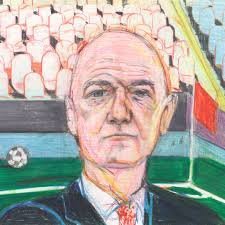
The Man Behind the Beautiful Game: Who is Gianni Infantino?
For millions of fans, the World Cup is more than just a tournament; it is a cosmological event that defines generations. But behind the spectacle of goals and glory stands one man who has fundamentally reshaped the sport’s landscape: Gianni Infantino. As the President of FIFA, Infantino has moved the organization away from the shadows of past scandals and into a new era of unprecedented growth, commercialization, and controversy.
From his humble beginnings as the son of Italian migrants in the Swiss Alps to becoming the most powerful figure in global soccer, Infantino’s journey is a study in ambition and precision. His leadership is defined by a single, driving philosophy: “More.” More teams, more matches, more revenue, and more influence.
The 2026 World Cup: A Masterpiece of Gigantism
The upcoming 2026 World Cup, hosted across the United States, Mexico, and Canada, is the ultimate expression of the Infantino era. This edition will be the largest in history, featuring:
- n
- 48 Teams: Expanding from the traditional 32 to increase global representation.
- 104 Matches: A massive increase in content for broadcasters and sponsors.
- Three Host Nations: A logistical feat designed to maximize revenue and reach.
While FIFA frames this expansion as a way to “unite the world,” critics argue that it is a move toward hyper-commercialization. With the introduction of dynamic ticket pricing—where costs can skyrocket based on demand—the tournament risks becoming an exclusive event for the wealthy, moving away from its roots as a game for the people.
From Blatter to Infantino: Evolution or Reinvention?
To understand Gianni Infantino, one must understand the wreckage he inherited. For decades, FIFA under Sepp Blatter was synonymous with systemic corruption, bribery, and backroom deals. When the FBI and Swiss authorities raided the Baur au Lac hotel in 2015, the world saw the crumbling of an empire built on fraud.
Infantino entered the scene not as a soccer star, but as a brilliant administrator. Where Blatter was a political operator who managed bribes, Infantino has sublimated FIFA into his own persona. He has transformed the presidency into that of a global political figure, leveraging his linguistic skills and diplomatic tact to build bridges with the world’s most powerful leaders.
The “Philosophy of More” and its Human Cost
Infantino’s tenure has seen a staggering increase in FIFA’s revenues, which have more than doubled. However, this financial success comes with a price. The expansion into new competitions, such as the revamped Club World Cup, has pushed athletes to their limits.
According to research in Sports Medicine, the combination of extreme environmental factors—from high altitude in Mexico City to stifling humidity in the U.S.—and a congested calendar is leaving players “bloody knackered.” The tension between monetizing the sport and protecting the players has become the central conflict of his presidency.
Politics, Neutrality, and the Global Stage
FIFA officially claims to be “neutral” in matters of politics and religion, but Infantino’s associations suggest otherwise. From his close ties with Vladimir Putin and the leadership in Qatar to his recent interactions with Donald Trump, Infantino operates in a world where political alignment is a tool for business.
Whether it is awarding peace prizes or facilitating matches in politically charged regions, Infantino believes that soccer is an irreducible good that transcends human context. To his supporters, he is a bridge-builder; to his detractors, he is an opportunist who ignores human rights in favor of state-funded stadiums and billion-dollar sponsorships.
Conclusion: Masterpiece or Folly?
As we approach the 2026 World Cup, the world will see the full imprint of Gianni Infantino’s vision. It will undoubtedly be a spectacle of unmatched scale and financial power. Yet, the question remains: has the game been saved by his efficiency, or has its soul been traded for a gold-vermeil trophy?
One thing is certain: in the modern era of soccer, the man in the suit is now as famous—and as controversial—as the players on the pitch.