The Weight of History: France and Senegal Set for a World Cup Rematch
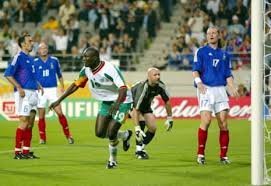
Football has a peculiar way of circling back to its most dramatic moments. For Senegal, the memory of the 2002 World Cup remains a golden chapter. It was the tournament where they stunned the world by defeating the reigning champions, France, 1-0 in their opening match. Now, twenty-two years later, the two nations are poised to clash once again in New Jersey, setting the stage for a narrative of redemption and renewal.
While the ghosts of 2002 loom large, France manager Didier Deschamps is determined to ensure that history does not repeat itself. For Deschamps, this isn’t just another group stage match; it is a test of humility versus hubris.
A New Era of Leadership: The Mbappé Factor
The French squad has undergone a significant transformation since their last World Cup final appearance. The departure of stalwarts like Hugo Lloris, Olivier Giroud, and Antoine Griezmann has left a leadership void. The captain’s armband now rests on the shoulders of Kylian Mbappé, a player with unmatched talent but a vastly different personality than his predecessors.
Deschamps acknowledges that the “baton has been passed,” yet the quest for a cohesive leadership core continues. While Mike Maignan is expected to step up as the new No. 1, the team is still searching for that intangible stability that defined previous championship runs.
The Tactical Puzzle: Mbappé and Dembélé
One of the most debated topics in French football right now is the on-pitch relationship between Mbappé and Ousmane Dembélé. The dilemma is simple yet complex: where does Dembélé fit?
- The No. 9 Debate: Following his success at PSG under Luis Enrique, many are calling for Dembélé to play as a central striker.
- The Deschamps Stance: The manager remains firm, arguing that moving Mbappé from the centre-forward role at this stage would be illogical.
- The Experiment: In recent warm-ups, Deschamps tested a more central role for Dembélé, flanked by the explosive Michael Olise.
This tactical tension mirrors the famous 2006 English struggle to fit Steven Gerrard and Frank Lampard into the same lineup, sparking a national debate on how to maximize world-class talent without sacrificing collective balance.
Learning from the 2002 Disaster
To understand Deschamps’ current approach, one must look back at the catastrophic failure of 2002. Despite boasting a terrifying attacking trio of Thierry Henry, David Trezeguet, and Djibril Cissé, France finished bottom of their group without scoring a single goal.
Former defender Lilian Thuram recalls that era as one of “absurdity” and “tragedy,” fueled by an arrogance that convinced the team they had already reached the final. Today, Deschamps is fighting that same complacency. He has openly cautioned players against the “crush the opponent” mentality, urging them to remain grounded.
Renewal and the Final Act
Unlike the stagnant squad of 2002, the current French team is characterized by freshness and enthusiasm. With 10 debutants and 12 players who have never seen World Cup action, Deschamps is embracing renewal over continuity. Players like Rayan Cherki and Michael Olise bring an unpredictability that makes France “less readable” to their opponents.
As this tournament marks Deschamps’ final chapter as manager—with Zinedine Zidane expected to take the reins—the squad is motivated to provide a fitting tribute to the most decorated man in French football history.
For more information on the current World Cup standings and team statistics, visit the Official FIFA Website.