Politics on the Gridiron: The Controversy Behind Ted Cruz’s Appearance on ESPN’s College GameDay
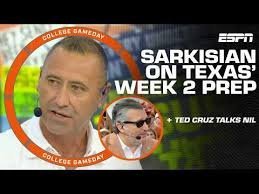
In a move that has sparked intense debate among sports fans and political analysts alike, ESPN’s “College GameDay” recently became an unexpected platform for legislative lobbying. The show granted Texas Senator Ted Cruz nearly ten minutes of airtime to promote the Protect College Sports Act, raising critical questions about the intersection of ESPN College GameDay politics and journalistic neutrality.
The “Free Airtime” Scandal: A One-Sided Conversation
During a high-stakes broadcast ahead of the Ohio State-Texas showdown, Senator Ted Cruz (R) used his segment to push for a bipartisan Senate bill he co-sponsored. While the interview, conducted by Rece Davis, focused on the need for legislative order in the NCAA, critics were quick to notice a glaring omission: the complete absence of opposing viewpoints.
Despite public opposition from figures like Senators Chris Murphy and Cory Booker, as well as the NAACP and the Congressional Black Caucus, the show provided no counter-argument. This shift toward political advocacy is particularly jarring for a program that has traditionally focused on the excitement and analysis of college football.
Decoding the Protect College Sports Act
The core of the debate centers on whether the NCAA needs a federal antitrust exemption to regulate athletes more strictly. Senator Cruz framed the current state of college athletics as “chaos,” citing the transfer portal and the return of NFL players to college as evidence of a lawless system.
Key pillars of the proposed act include:
- n
- Transfer Restrictions: Restoring a one-time transfer exception to limit “portal hopping.”
- Eligibility Caps: Implementing a hard age limit of 24 and a five-year eligibility window.
- NIL Regulation: Capping agents’ commissions at 5% to prevent athlete exploitation.
- Revenue Sharing: Establishing caps on how much schools can pay athletes directly.
n
n
n
n
Fact-Checking the “Bankruptcy” Narrative
One of the most contentious points raised during the segment was the claim that college sports programs are facing financial ruin due to athlete compensation. However, data suggests a different story. According to reports from OpenSecrets and financial analyses of athletic departments, revenue has skyrocketed over the last two decades, fueled by massive TV deals.
While expenses have also risen, the primary drivers aren’t athlete NIL (Name, Image, and Likeness) deals, but rather:
- n
- Astronomical Coaching Salaries: The race for top-tier coaches has pushed payrolls to unprecedented levels.
- Lavish Facilities: The “arms race” for state-of-the-art training centers and luxury dorms.
- Administrative Bloat: An increase in support staff, from nutritionists to personal barbers for athletes.
n
n
n
The Missing Voice: The Student-Athlete
Perhaps the most concerning aspect of the Protect College Sports Act is the lack of meaningful input from the athletes themselves. While the bill claims to “protect students,” many skeptics argue it simply protects the NCAA’s power structure. By enshrining “fair market value” for NIL deals into law, the bill could potentially limit the earning power of the very athletes it claims to support.
Conclusion: A New Era of Sports Media?
The appearance of Senator Cruz on College GameDay signals a potential shift in how sports media handles political discourse. When a parent company like Disney has documented lobbying interests in the same legislation being promoted on air, the line between sports entertainment and political influence becomes dangerously thin.
As the Senate moves toward a vote, the sports world must ask: Is this bill truly about protecting the game, or is it about maintaining a status quo that favors institutions over individuals?