Eli Drinkwitz’s High-Stakes Gambit: Is Mizzou’s Future Tied to Fortune 500 Dollars?
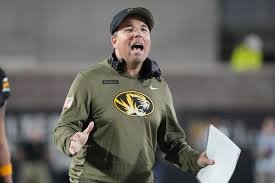
The world of college football is constantly evolving, and perhaps no one understands this better than Eli Drinkwitz, head coach of the Missouri Tigers. Following a recent Mizzou victory, a fascinating anecdote from SEC Network announcer Tom Hart sparked widespread speculation: Coach Drinkwitz isn’t prioritizing personal wealth in his coaching decisions, but rather a deeper financial commitment from Missouri’s corporate giants. This isn’t just about money; it’s about alignment, investment, and ultimately, the future of Mizzou Football in the high-stakes era of Name, Image, and Likeness (NIL).
The Unexpected Call for Corporate Investment
During a post-game conversation, Hart revealed that Drinkwitz’s focus amidst swirling rumors of other coaching vacancies wasn’t his own paycheck. Instead, the coach emphasized the critical need for Fortune 500 companies within Missouri to actively invest in the Tigers’ athletic program. His candid observation: “We’ve got all these Fortune 500 companies, not a single one advertises in this building.”
While this statement might be an oversimplification—companies like Edward Jones and Ambetter already partner with Mizzou athletics, some even advertising in Memorial Stadium—the underlying message is clear. Drinkwitz sees untapped potential in the state’s corporate landscape as a vital resource for competitive advantage in modern college football.
NIL: The New Battleground for Talent
Drinkwitz’s persistent appeals for corporate involvement are deeply rooted in the current NIL environment. In an era where top recruits and existing star players can command significant endorsement deals, financial backing is a non-negotiable component of building a championship roster. As Drinkwitz himself put it, retaining talent like Donovan Olugbode and Matt Zollers isn’t “wishful thinking; you’ve got to offer them the same amount of money that other people are.”
The NCAA’s new guardrails allow universities to distribute substantial revenue to student-athletes (around $20.5 million for full opt-in programs like Mizzou). However, Drinkwitz highlights that this is just the “bare minimum” for an SEC program to compete at the elite level. The real game-changer lies in third-party NIL deals, and here’s where Fortune 500 companies become crucial.
A Strategic Loophole?
While new regulations aim to curb “pay-for-play” schemes by requiring approval for deals over $600, corporate partnerships offer a unique advantage. Due to the “fiduciary responsibility that Fortune 500 company has to its shareholders,” their approved NIL agreements can provide guaranteed, competitive compensation to athletes. This isn’t just about attracting new talent; it’s about retaining the stars already on the roster, preventing them from being lured away by richer offers from competing programs.
The Ever-Present Coaching Carousel
This public plea for investment doesn’t occur in a vacuum. Eli Drinkwitz is a young, competitive coach whose name frequently surfaces in discussions about open head coaching positions. Whispers linking him to programs like Penn State, LSU, Florida, and Auburn serve as a potent reminder of the precarious nature of the coaching landscape. While Mizzou has made significant investments – a $33 million indoor facility, a $250 million north end zone renovation, and front-loaded NIL payments – Drinkwitz’s comments suggest he believes more is needed to take the “six-inch jump” from “good to great.”
His last contract extension, surprisingly, increased his assistant coach salary pool rather than his personal compensation, further underscoring his focus on program resources. With a reported $9 million salary, he’s among the nation’s highest-paid coaches. Yet, he states, “I think there’s a misconception that we’re one of the bigger spenders in NIL. I don’t think that’s true.”
What’s Next for Mizzou and Drinkwitz?
The coming months will be pivotal for Mizzou Football. Drinkwitz’s candid appeal is a direct challenge to the state’s corporate leaders and a clear signal of his perceived needs. His future in Columbia appears to hinge not just on wins and losses, but on a collective commitment to build a program that can genuinely compete for championships in the modern era of college athletics. The question remains: Will Missouri’s corporate elite answer his call, or will the allure of greener, better-funded pastures elsewhere prove too strong for one of the most talked-about coaches in the game?
The stakes are higher than ever, and Eli Drinkwitz is making sure everyone understands the price of greatness in today’s college football.