Denmark vs North Macedonia: A Game with Global Implications
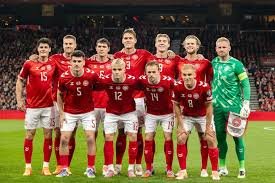
Denmark’s national soccer team faces North Macedonia in Copenhagen, aiming to secure a spot in this summer’s FIFA World Cup, hosted in the United States, Canada, and Mexico. However, the stakes extend far beyond the pitch, drawing the attention of a unique and passionate fanbase over 2,000 miles away: the people of Greenland.
A Kingdom’s Connection
With the US co-hosting the tournament and recent geopolitical discussions – including former President Donald Trump’s consideration of acquiring Greenland – the match is being watched with particular intensity. Over 57,000 Greenlanders will be tuning in, not just for the sporting contest, but for what Denmark’s World Cup journey represents for their own aspirations.
“Greenlandic people cheer for Denmark,” explains Patrick Frederiksen, captain of the Greenland men’s national team, to CNN Sports. “In football, handball, and most sports, we are part of the Danish kingdom, so we are one with Denmark. It’s something we’ve grown up with, and many are excited to see Denmark potentially qualify for the World Cup.”
A Conditional Loyalty
However, like any passionate fanbase, support is often tied to results. Knud Olsen Egede, a lifelong Greenlandic soccer fan and youth coach at Boldklubben af 1967 (B-67), the most successful team in Greenlandic soccer history, humorously notes, “There’s a saying here: When Denmark wins, we win. But if Denmark loses, they lose.”
This playful sentiment highlights a deeper truth: the Greenlandic connection to Denmark is strong, yet conditional. Historically, this relationship hasn’t always been voluntary, and Greenland harbors its own ambitions.
Greenland’s Fight for Recognition
Greenland itself is striving for recognition on the global soccer stage. The Greenlandic Football Association (KAK) recently faced a setback when its application to join Concacaf – the governing body for soccer in North and Central America and the Caribbean – was unanimously rejected in June 2025. KAK president Kenneth Kleist criticized the decision, stating, “This is not a victory for football democracy.”
Currently, Greenland is unable to join either Concacaf or UEFA (the European governing body) due to its status as a self-governing autonomous territory within the Kingdom of Denmark, which isn’t recognized as a sovereign state by the United Nations. This prevents KAK from participating in competitive international fixtures.
A Geopolitical Shield
Therefore, when Denmark plays, they represent not only a European nation but also a kingdom that includes Greenland, a territory still fighting for its voice in the world of soccer. This connection is further reinforced by geopolitical realities. Denmark, as a NATO member, provides a crucial security shield for Greenland, particularly in a volatile global climate.
Trump’s Influence and Greenland’s Resolve
The recent interest from the US in acquiring Greenland, particularly former President Trump’s overtures, has unexpectedly strengthened the bond between Denmark and Greenland. As Peter Harmsen, author of “Greenland at War,” explains, “Until Trump started talking about acquiring Greenland, very few Danes thought very much about the ties to Greenland. But now, at least part of the Danish population has realized they risk losing something valuable.”
Greenland’s Prime Minister, Jens-Frederik Nielsen, unequivocally stated Greenland’s position: “Greenland does not want to be owned by the USA…We choose the Greenland we know today, which is part of the Kingdom of Denmark.”
A Dream of Independence
For Greenlanders, supporting Denmark is a complex mix of shared history and a longing for independence. Captain Frederiksen expresses the dream of Greenland competing on its own: “We haven’t seen many Greenlandic players in the Danish national team, so we feel separate in that sense…We need to be accepted as an independent country in football.”
The desire for self-determination is palpable. Egede poignantly states, “We want to be our own nation – and that’s the short message.”
For now, Greenland watches and hopes. One day, they aspire to be seen – both on and off the soccer pitch.