Decoding the 2026 World Cup: Understanding Group A Standings and the Race for Third Place
The 2026 FIFA World Cup is bringing a new level of excitement—and complexity. With the expansion to 48 teams, the path to the knockout stages is no longer a simple “top two advance” scenario. As fans keep a close eye on the group a standings and other group tables, a new, high-stakes battle has emerged: the fight for the third-place berths.
From surprising draws by Cape Verde against Spain to the dominant early performances of Sweden and Australia, the tournament is already defying expectations. But for many teams, the real question is: How do we secure one of those elusive third-place spots?
The New Math: How Third-Place Qualification Works
In previous tournaments, finishing third often meant packing your bags. However, the new structure changes the game. Now, the top eight of the twelve third-place teams will advance to the Round of 32. This creates a mathematical puzzle that depends not only on your own group but on the results of every other match in the tournament.
The “Magic Number” for Advancement
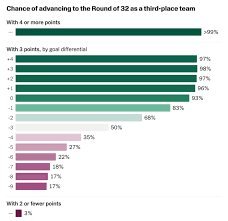
Based on extensive simulations, there is a general rule of thumb for teams hoping to slide into the knockout rounds via the third-place route:
- n
- The Baseline: Three points and a goal differential close to zero (or positive) is typically the minimum cutoff point.
- The Danger Zone: Finishing fourth with three points is a dead end; regardless of goal differential, fourth place does not advance.
- The Warning: Avoid lopsided defeats. A massive loss (similar to Curacao’s 7-1 defeat to Germany) can destroy your goal differential and kill your chances, even if you have the required points.
Analyzing the Group Dynamics: Group F vs. Group G
Not all third-place opportunities are created equal. The probability of advancing depends heavily on which group you are in.
The Advantage of Group F
Group F is currently a prime example of a “friendly” group for third-place hopefuls. With Sweden securing a massive 5-1 win over Tunisia, they have built a goal differential cushion. Even with subsequent losses, their early lead in goal difference makes them strong candidates to advance if they finish third.
The Struggle in Group G
Conversely, Group G is currently the least likely to produce a successful third-place team. Because the underdogs (Iran and New Zealand) drew 2-2 in their opening match, they missed their best chance to secure a win. Now facing giants like Belgium and Egypt, their path to the Round of 32 has become significantly steeper.
Pro Tips for Tracking Your Team’s Chances
If you are obsessively refreshing the group a standings or tracking your national team, keep these three strategies in mind:
- Focus on the Group, Not Just the Team: Don’t just look at who is currently third; look at the likelihood of that specific group producing a qualifying third-place team.
- Use Live Trackers: Because the standings change minute-by-minute, official tables can be misleading. Use a real-time FIFA World Cup tracker to see live probability shifts.
- Compare Completed Groups: Only compare your team’s stats against teams from groups that have finished all their matches. If you are already better than four of the finalized third-place teams, you are in a strong position.
The road to the 2026 final is more unpredictable than ever. Whether your team dominates their group or fights for a mathematical miracle in third place, one thing is certain: every single goal now counts more than ever before.