Dalton Rushing Slide: A Bold Throwback That Broke MLB Rules
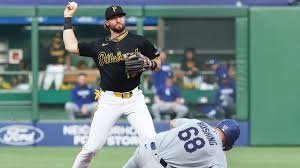
Baseball is a game of traditions, and occasionally, a player does something that transports fans back to a completely different era. During a recent clash between the Los Angeles Dodgers and the Pittsburgh Pirates, catcher Dalton Rushing provided a moment of pure nostalgia—though it didn’t sit well with the official rulebook.
Rushing executed a slide that would have been considered a masterpiece in the 1980s. In a bygone era, this move would have been analyzed on overhead projectors in high school clubhouses as the gold standard for breaking up a double play. However, in the modern game, the Dalton Rushing slide was less of a textbook example and more of a rulebook violation.
Old School Aggression vs. Modern Safety
To the casual observer, the slide looked perfectly executed. But to the umpires and MLB officials, it was a clear violation. The irony? Rushing was so committed to the “take-out” that he barely grazed the bag, sliding closer to the outfield grass than the actual base.
While some fans miss the raw, aggressive nature of the old-school game, the league has moved toward prioritizing player safety to prevent catastrophic injuries.
Breaking Down MLB Rule 6.01(j): The “Chase Utley Rule”
If you’re wondering why a move that was legal for decades is now forbidden, look no further than Rule 6.01(j). Often referred to as the “Chase Utley Rule”, this regulation was clarified and tightened after a series of high-impact collisions that threatened players’ careers.
According to MLB, for a slide to be considered a “bona fide slide,” the runner must meet specific criteria:
- n
- Ground Contact: The runner must make contact with the ground before reaching the base.
- Intent to Reach: There must be a clear attempt to reach the base with a hand or foot.
- Staying on Base: The runner must attempt to remain on the base upon completion of the slide (except at home plate).
- No Path Alteration: The runner cannot intentionally change their path specifically to initiate contact with a fielder.
n
n
n
n
The Verdict: A Costly Nostalgia Trip
In the case of Dalton Rushing, the intent seemed clear: the primary goal was to remove the shortstop from the equation rather than simply reaching the bag. This made the umpire’s decision cut and dried. While it was a thrilling moment of aggression, it served as a stark reminder that the romanticized, “wallop-someone” style of baseball has officially been retired.
Whether you believe the game has become too soft or safer for the athletes, the Dalton Rushing slide will certainly be remembered as a vivid reminder of how much the sport has evolved over the last century.