Baseball World Series: The Controversial Check Swing and the Push for MLB Tech
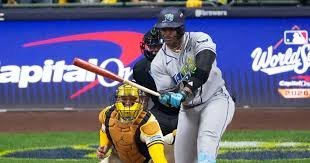
The Swing That Shook the World Series: Human Judgment vs. High-Tech Precision
In the high-stakes environment of the Baseball World Series, the difference between a historic championship and a heartbreaking loss often comes down to a single second, a single pitch, or a single umpire’s call. Recently, the Milwaukee Brewers found themselves just two wins away from their first-ever franchise title, thanks in part to a play that has left fans and analysts debating the very nature of baseball rules.
A Game-Defining Moment: The Yandy Díaz Controversy
The drama unfolded in the top of the ninth inning with the Brewers clinging to a slim 5-4 lead. With two outs and a runner on third, Tampa Bay Rays’ designated hitter Yandy Díaz stepped to the plate. On a full count (3-2), a curveball from Aaron Ashby sparked a chaotic sequence:
- n
- The Initial Call: Home plate umpire Jim Wolf ruled that Díaz had not swung, which would have resulted in a walk.
- The Appeal: Milwaukee catcher William Contreras quickly appealed to the first base umpire.
- The Final Verdict: The umpire overturned the initial call, ruling that Díaz had indeed swung. Strike three. Game over.
While the Brewers celebrated, the Rays were left questioning a decision that felt like a coin flip. As Tampa Bay manager Kevin Cash noted, from his perspective, it looked like a swing—but the ambiguity of the moment highlighted a glaring hole in the MLB official rulebook.
The “Check Swing” Paradox: Where are the Rules?
Surprisingly, there is no official, technical definition of a “check swing” in the MLB rules. The regulations simply state that a strike occurs when a pitch is “struck at by the batter.” This leaves the decision entirely to the umpire’s discretion, relying on an imaginary plane that the batter must cross for a swing to be considered complete.
It is a classic case of “you know it when you see it,” but in a Baseball World Series atmosphere, “knowing it” isn’t always enough for the losing team.
Can Technology Save the Game? The Rise of ABS and Hawk-Eye
The controversy has reignited the conversation about the Automated Ball-Strike (ABS) system. While MLB has already introduced ABS to ensure balls and strikes are called accurately, check swings remain outside the realm of reviewable plays. This means managers cannot challenge a check-swing call, regardless of how clear the replay looks.
However, a solution is already being tested. In the Arizona Fall League and various minor leagues (including the Florida State League and Pacific Coast League), MLB has experimented with Hawk-Eye technology to determine if a swing crossed a specific 45-degree threshold from home plate.
The Road Ahead: Commissioner Manfred’s Vision
MLB Commissioner Rob Manfred has remained cautious about bringing check-swing challenges to the Major Leagues. His primary concern is the sequential implementation of technology; he believes the league must first fully adapt to the ABS system before adding another layer of complexity to the at-bat process.
As the Baseball World Series continues to push the boundaries of athletic performance, the pressure to eliminate human error through technology grows. Whether the “human element” of umpiring is a cherished tradition or an outdated flaw remains the biggest debate in the sport today.
📰 You May Also Like