Master Your Draft: Who to Avoid in 2026 Fantasy Football
As NFL training camps kick into high gear, the excitement for the upcoming season is palpable. For the dedicated fantasy football manager, this is the time to calibrate your strategy, analyze the ADP (Average Draft Position), and separate the true juggernauts from the overhyped traps. While finding “diamonds in the rough” can win you a championship, avoiding overvalued players is what keeps your team from collapsing.
Selecting a player based on name value rather than current metrics is a recipe for disaster. To help you navigate your draft, we’ve analyzed the players whose current costs far outweigh their projected output for 2026.
The Quarterback Dilemma: Brand Name vs. Production
Quarterback pricing is generally efficient, but a few names stand out as risky investments given their current trajectory.
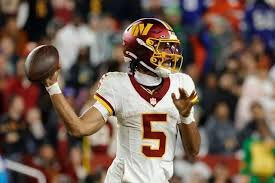
- Jayden Daniels (Commanders): After a stellar rookie year, Daniels hit a wall in 2025. With a plummeting completion percentage (60.6%) and a lack of reliable weapons beyond Terry McLaurin, relying on him as a top-tier QB is a gamble. In a league where efficiency is king, Daniels’ reliance on “hero ball” is a red flag.
- Jordan Love (Packers): With Matt LaFleur prioritizing a run-heavy approach and capping Love’s passing volume, his ceiling in fantasy is lower than his ADP suggests.
- C.J. Stroud (Texans): Stroud has become a “brand-name” QB. While talented, his regression over the last two seasons suggests he may provide more stability than weekly explosive upside.
Wide Receivers: The Volume Trap
Efficiency is great, but volume is what wins fantasy football matchups. Several high-profile receivers are currently priced for volume they may never see.
The Case of the Deep Threat: Pierce (Colts)
Pierce is the definition of a “boom-or-bust” asset. While his yards per target are impressive, his target share is alarmingly low. In an NFL landscape dominated by two-high safety looks designed to kill the deep ball, Pierce’s high aDOT (Average Depth of Target) makes him an unreliable weekly starter. Unless he proves he can operate in the intermediate range, he is a risky redraft pick.
Other WRs to be cautious of include:
- Davante Adams (Rams): Age is catching up, and his target share has dipped to its lowest since 2017. He is now firmly the WR2 behind Puka Nacua.
- DJ Moore (Bills): Following a crash in his 2025 metrics, Moore faces stiff competition for targets in a crowded Buffalo offense.
Tight Ends: Efficiency Without Opportunity
The TE position is notoriously volatile, but some players are being drafted based on potential rather than actual usage.
Dalton Kincaid (Bills) is a prime example. While his per-route efficiency is elite, his actual time on the field is lacking. You cannot win with a TE who doesn’t run routes consistently. With the Bills shifting toward a run-first identity under Joe Brady, Kincaid’s path to a top-5 finish is narrow.
Similarly, Mark Andrews (Ravens) and Dallas Goedert (Eagles) are seeing their efficiency erode. Andrews, entering his age-31 season, is showing signs of a permanent decline in targets per route run (TPRR).
Quick-Fire Fades: Running Backs to Skip
Avoid these backs if the cost is too high in your draft:
- Kyren Williams (Rams): A split backfield with Blake Corum makes Williams a risky premium investment.
- Bucky Irving (Buccaneers): Increased competition from Kenneth Gainwell and Sean Tucker limits his ceiling.
- RJ Harvey (Broncos): With the return of J.K. Dobbins and the addition of Jonah Coleman, Harvey’s top-30 ADP is inflated.
Final Strategy Tip
When drafting for fantasy football, prioritize opportunity over efficiency. A player who is moderately efficient but gets 10 targets a game will almost always outperform a highly efficient player who only gets 3 targets. For more real-time NFL stats and updates, check out NFL Official Stats to track target shares as training camp progresses.