Prepare for a Celestial Spectacle: Geomagnetic Storm to Light Up Canadian Skies
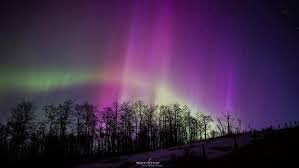
Keep your eyes on the night sky! A captivating display of the Northern Lights is possible across Canada later this week, thanks to a passing solar storm. This event is particularly exciting as it occurs near the March Equinox, a time when auroral displays can be exceptionally vibrant and colourful.
What’s Happening? A Solar Storm is on its Way
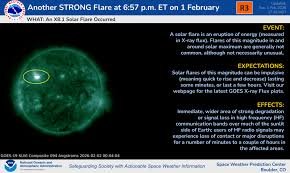
On Monday, March 16th, a moderate solar flare erupted from the Sun’s Earth-facing side. This flare triggered a coronal mass ejection (CME) – a massive expulsion of plasma and magnetic field from the Sun. Satellite imagery captured the event as the eruption expanded outwards. Now, this CME is travelling towards Earth and is expected to arrive sometime overnight between Wednesday and Thursday.
According to NASA’s Solar Dynamics Observatory and the agency’s ENLIL computer model, the solar storm is predicted to reach us around 12 UTC on March 19th. (See image below)
Image: M2.7 flare from March 16, 2026, as imaged by the Solar Dynamics Observatory, and NASA’s ENLIL computer model run showing the arrival of the solar storm at around 12 UTC on March 19. (NASA)
Geomagnetic Storm Watch Issued
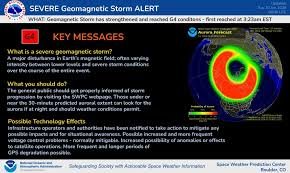
The arrival of this ‘solar storm’ will likely cause a disturbance in Earth’s magnetic field, known as a geomagnetic storm. The NOAA’s Space Weather Prediction Center (SWPC) has issued a G2 (moderate) geomagnetic storm watch for the early hours of Thursday, March 19th.
The SWPC forecast anticipates:
- G1 (minor) storm levels: Around 11 p.m. Wednesday night through 2 a.m. Thursday morning, EDT.
- G2 (moderate) storm levels: From 2 a.m. through 8 a.m. EDT.
These conditions favour central and western regions of Canada for the most spectacular aurora displays. However, the timing remains somewhat uncertain. The CME could arrive earlier, resulting in brighter auroras on Wednesday night, particularly in eastern regions. Conversely, a later arrival could mean the best views occur during the day on Thursday, potentially diminishing the spectacle.
Where to See the Northern Lights
As of Tuesday afternoon, sky conditions aren’t ideal across the country. However, clear skies are predicted in:
- Eastern Canada: Northwestern Ontario, eastern New Brunswick, Prince Edward Island, and western Nova Scotia.
- Western Canada: Southern Manitoba, southwestern Saskatchewan, southern Alberta, and the interior and central regions of British Columbia.
The Science Behind the Spectacle: Equinoxes and Auroras
The Sun and Earth are both surrounded by magnetic fields. Solar activity, like flares and CMEs, interacts with Earth’s magnetic field, creating the mesmerizing Aurora Borealis (Northern Lights). These auroras appear near the north and south poles as Earth’s magnetic field traps particles from the solar wind and directs them into the atmosphere.
Interestingly, auroras are often more intense around the spring and fall equinoxes due to the Russell-McPherron effect. During these times, the Sun and Earth’s magnetic fields align more favourably, creating ‘cracks’ in Earth’s magnetic field that allow more particles to stream into the atmosphere. This results in brighter and more colourful auroral displays.
Image: The orientation of Earth’s magnetic field at northern summer solstice (left), equinox (centre), and northern winter solstice (right). The Sun is located far off the left side of the field of view, and its magnetic field is oriented most in alignment with the centre panel. (NASA/Scott Sutherland)
Stay Updated
While forecasters are doing their best to predict the arrival and intensity of this geomagnetic storm, the exact impact remains to be seen. Check back for updates on the weather and aurora forecast as they become available. Don’t miss this opportunity to witness a breathtaking natural phenomenon!
*2026 BrandSpark® Canadian Trust Study & 2026 Pollara Trust in Media Study – Canada’s #1 most trusted weather brand and news source.