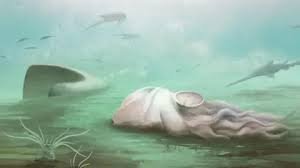
A 300-Million-Year-Old Mystery Solved: The Fossil That Wasn’t an Octopus
For decades, a 300-million-year-old fossil, discovered at Mazon Creek in Illinois, USA, held the title of the world’s oldest octopus. Featured in the Guinness Book of World Records, Pohlsepia mazonensis captivated paleontologists and the public alike. However, groundbreaking research from the University of Reading has rewritten the story, revealing that this iconic fossil is not an octopus at all, but a relative of the modern Nautilus.
The Power of Modern Technology
The re-identification wasn’t possible until recently, thanks to advancements in imaging technology. Researchers utilized synchrotron imaging – a technique employing beams of light far brighter than the sun – to peer beneath the surface of the fossil. This revealed tiny teeth, a crucial detail that definitively pointed to a nautiloid ancestor rather than an octopus.
“It turns out the world’s most famous octopus fossil was never an octopus at all,” explains Dr. Thomas Clements, lead author and lecturer in invertebrate zoology at the University of Reading. “It was a nautilus relative that had been decomposing for weeks before it became buried and later preserved in rock, and that decomposition is what made it look so convincingly octopus-like.”
A Case of Mistaken Identity
The initial identification of Pohlsepia as an octopus, made 25 years ago, was based on its apparent eight arms and fin-like structures. However, the decomposition process significantly altered the fossil’s appearance, creating an illusion. The newly discovered teeth matched those of other fossil nautiloids found at the same Mazon Creek site, solidifying the revised classification.
Rewriting the Evolutionary Timeline
This discovery has significant implications for our understanding of cephalopod evolution. The findings suggest that octopuses appeared much later in Earth’s history than previously believed, likely during the Jurassic period. Scientists now believe the evolutionary split between octopuses and their 10-armed relatives occurred in the Mesozoic era, not hundreds of millions of years earlier.
“We now have the oldest soft tissue evidence of a nautiloid ever found, and a much clearer picture of when octopuses actually first appeared on Earth,” Dr. Clements adds. “Sometimes, re-examining controversial fossils with new techniques reveals tiny clues that lead to really exciting discoveries.”
Guinness World Records Reacts
Adam Millward, Guinness World Records’ managing editor, acknowledged the significance of the research. “This is a fascinating discovery and congratulations to the University of Reading on their research. We will be resting the original ‘oldest octopus fossil’ title and look forward to reviewing this new evidence.”
Further Research & Resources
For more information on cephalopod evolution, explore resources from the Natural History Museum and the Britannica Encyclopedia.