Echinus Geyser: A Rare Spectacle in Yellowstone National Park
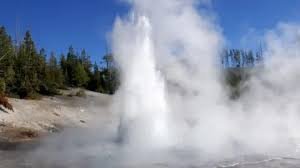
Yellowstone National Park is once again showcasing one of its most unique geological features: the Echinus Geyser. After a six-year slumber, this world-renowned acidic geyser has roared back to life, captivating park officials and researchers. The eruptions, which began in February, mark a significant event, though the duration of this activity remains uncertain.
What Makes Echinus Geyser So Special?
Located in the Norris Geyser Basin, Echinus Geyser isn’t your typical hot spring. It’s one of the few acidic geysers in the world, a characteristic that makes it particularly fascinating – and fragile. Most acidic geysers tend to erode over time as the acid dissolves the surrounding rock. However, Echinus Geyser has defied expectations, maintaining its structure due to a unique chemical composition.
According to the US Geological Survey (USGS), the acidity of Echinus Geyser is more akin to that of orange juice or vinegar than a highly corrosive acid. This milder acidity, resulting from a mix of acidic gases and neutral waters, prevents the geyser’s “plumbing” from being eaten away. The USGS continues to monitor the geyser closely.
A History of Eruptions
Echinus Geyser has a dynamic history. In the 1970s, it erupted with remarkable regularity, shooting water 40 to 80 minutes apart. These eruptions would sometimes last up to 90 minutes, sending plumes of water soaring as high as 75 feet (23 meters) into the air. While the eruptions became less predictable in subsequent decades – with only a handful recorded in 2018, 2019, and 2020 – the recent activity has returned to levels seen in 2017.
Currently, eruptions are lasting up to three minutes, with water reaching heights of 30 feet. The USGS noted on X (formerly Twitter), “Geysers are always turning on and off. That’s Yellowstone being Yellowstone!”
How Do Geysers Work?
Geysers are truly remarkable natural phenomena. They form when groundwater is heated by geothermal activity – in Yellowstone’s case, by magma deep beneath the surface. This heated water becomes superheated under pressure within a network of underground channels. When the pressure overcomes the weight of the water above, a spectacular eruption occurs. The water then cools and descends back into the system, restarting the cycle.
Will the Show Continue?
While the return of Echinus Geyser is exciting, its future activity is uncertain. Researchers caution that geysers often experience periods of activity followed by dormancy. Given the geyser’s past behavior, it may quiet down again soon, potentially before the peak summer tourist season. The last few days of February saw no eruptions, suggesting a possible return to dormancy.
The Name Behind the Wonder
The geyser’s name, Echinus, is derived from the surrounding rocks, which bear a striking resemblance to sea urchins – a type of echinoderm. This unique geological feature continues to fascinate and inspire awe in all who witness its power and beauty.
For more information on Yellowstone’s geysers, visit the National Park Service website.