The International Space Station (ISS) is a hub of groundbreaking scientific research, but sometimes, the most captivating experiments are born from simple curiosity. Enter Don Pettit, a NASA astronaut with a green thumb and a fascinating question: could you grow a potato in space? His answer, documented in a now-famous experiment, is a testament to human ingenuity and the surprising resilience of life beyond Earth.
The Genesis of the Space Potato
During his six-month mission on the ISS in 2010, Don Pettit wasn’t just conducting complex physics experiments. He was also pondering the challenges of long-duration space travel, particularly the need for sustainable food sources. The idea of growing a potato came to him as a way to explore the possibilities of plant cultivation in a closed-loop life support system. He wasn’t aiming for a full-scale farm, but rather a proof-of-concept demonstration.
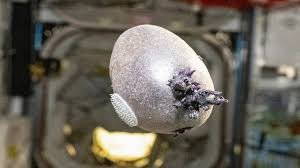
Pettit secured a single potato, a red variety, and a small growth chamber he constructed from readily available materials on the ISS – essentially a repurposed food container. He used wet paper towels as a growing medium, providing the potato with moisture and a dark environment. The experiment wasn’t officially sanctioned by NASA; it was a personal project, fueled by Pettit’s passion for botany and problem-solving.
The Experiment Unfolds: Challenges and Surprises
Growing anything in space presents unique hurdles. Microgravity affects water behavior, making it difficult to deliver nutrients to the plant’s roots. The lack of natural sunlight necessitates artificial lighting. And, of course, the confined environment of the ISS demands careful management of resources and waste.
Despite these challenges, the potato began to sprout. Pettit meticulously documented the process, sharing updates and photos through his blog and social media. The experiment wasn’t without its setbacks. The potato didn’t produce a full-sized, harvestable crop. However, it *did* grow sprouts and small tubers, demonstrating that potato cultivation was, in principle, possible in the harsh environment of space. This was a significant achievement.
The Science Behind the Spud: Implications for Future Space Travel
Don Pettit’s space potato wasn’t just a fun experiment; it had serious scientific implications. It provided valuable data on plant growth in microgravity, which is crucial for developing bioregenerative life support systems for long-duration missions to Mars and beyond. These systems aim to recycle resources, including water and oxygen, and produce food onboard spacecraft, reducing reliance on resupply missions from Earth.
Further research, building on Pettit’s work, is being conducted on the ISS through projects like the Veggie plant growth system. Veggie has successfully grown lettuce, tomatoes, and other crops, providing astronauts with fresh produce and valuable insights into space agriculture. You can learn more about NASA’s space agriculture efforts here.
A Legacy of Innovation
Don Pettit’s space potato remains a captivating story, inspiring both scientists and the public. It’s a reminder that even in the most challenging environments, human curiosity and ingenuity can flourish. It’s a small potato, but it represents a giant leap towards a future where humans can sustainably live and explore beyond our planet.