Unveiling the Mysteries of Cloud Sponges in the Saanich Inlet
For one Langford diver, Ryan Swan, a quest to witness the beauty of local ancient cloud sponges led him back to his technical diving roots. The journey involved a program reboot and a stunning reward found within the depths of the Saanich Inlet.
What are Cloud Sponges?
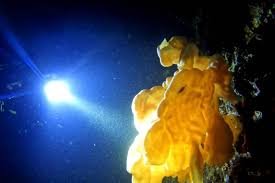
Swan embarked on a search for cloud sponges – scientifically known as aphrocallistes vastus – remarkable organisms constructed from silica. These sponges form intricate skeletons composed of microscopic, glass-like structures called spicules. While more commonly found underwater in Vancouver, these delicate creatures are a rarer sight on Vancouver Island.
After initial unsuccessful attempts shore diving in the Inlet, Swan sought advice from experienced “tech divers.” Their recommendation? To go deeper – a challenge that required revisiting technical training completed years prior.
Returning to Technical Diving
Swan revisited Wilson’s Diving in Colwood, undertaking further training to expand his skills beyond recreational diving limits. This involved mastering specialized gear, precise gas management, decompression techniques, equipment redundancy, and emergency procedures. “It’s cool, it’s a lot of fun to learn a new skillset and be able to do something more advanced,” Swan shared, appreciating the collaborative spirit of diving with Vancouver Island tech divers and Bak Tec Diving.
The Discovery at Christmas Point
The team made two dives, reaching depths of 40 and then 45 metres. “That’s the best place to see those sponges at Christmas Point, in my opinion,” Swan explained. The entire experience was meticulously documented on film and shared on his YouTube channel, with the goal of promoting conservation and education.
“Once you’re down there it’s beautiful and there are so many of these cloud sponges growing off the wall, and there’s lots of interesting variations and shapes of sponges,” he described. “They’re very fragile and a delicate species, they can get damaged by boat anchors, by fishing equipment. Any sort of protection or conservation efforts towards them is good for the environment and good for the species.”
The Importance of Glass Sponge Reefs
British Columbia is home to three types of reef-building glass sponges: the cloud sponge, the goblet sponge (heterochone calyx), and farrea occa. These ancient reefs are vital ecosystems.
Recognizing their importance, a federal Marine Protected Area was established in 2017 in the Hecate Strait, safeguarding four major glass sponge reefs estimated to be over 9,000 years old. The Hecate Strait and Queen Charlotte Sound Glass Sponge Reefs MPA aims to conserve the biological diversity, structural habitat, and ecosystem function of these remarkable reefs. Learn more about the Hecate Strait and Queen Charlotte Sound Glass Sponge Reefs MPA.
Inspiring Conservation
Swan’s video is more than just a technical diving adventure; it’s a compelling call to action, hoping to inspire a sense of protection among those who use our waterways. You can find the full episode online at YouTube.