The Unseen Danger: Thousands of Asteroids Pose a Threat to Earth
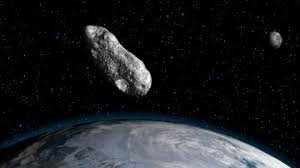
Humanity currently lacks a robust defense system against the tens of thousands of asteroids orbiting near Earth, many of which possess the potential to cause catastrophic city-level destruction. This unsettling reality is a major concern for space agency officials, with one admitting the possibility of an impact “keeps me up at night.”.
The Scale of the Problem
Kelly Fast, a planetary defense officer at NASA, recently revealed that approximately 25,000 asteroids exceeding 140 meters in diameter orbit near Earth. Alarmingly, NASA has only identified the location of roughly 40% of these potentially hazardous objects. The challenge lies in detecting these asteroids as they travel alongside Earth in orbit around the Sun.
Traditionally, asteroids are spotted by the sunlight they reflect. However, the upcoming launch of the Near-Earth Object Surveyor space telescope next year promises a breakthrough. This telescope will utilize thermal signatures to detect darker asteroids and comets previously invisible from Earth, significantly enhancing our ability to identify potential threats.
Finding Asteroids Before They Find Us
Fast emphasizes the critical mission of “finding asteroids before they find us” and, if necessary, developing strategies for “getting asteroids before they get us.” This proactive approach is vital for planetary defense.
The DART Mission: A Proof of Concept
In 2022, NASA conducted a groundbreaking experiment with the Double Asteroid Redirection Test (DART). The spacecraft was deliberately crashed into Dimorphos, a mini-moon orbiting an asteroid, at a staggering 14,000 mph. This successful mission demonstrated the feasibility of altering an asteroid’s trajectory. You can learn more about the DART mission on the NASA website.
A Critical Gap in Planetary Defense
Despite the success of DART, Nancy Chabot, a planetary scientist at Johns Hopkins University who led the mission, expressed concern about the lack of readily available follow-up missions. “It keeps me up at night that there are no other Dart-like spacecraft ready to launch if an asteroid were detected tomorrow on a collision course with Earth.”
Last year, asteroid YR4, measuring up to 90 meters in width, initially raised concerns with a 3.2% chance of impacting Earth in 2032. While NASA later downgraded the risk to zero, the incident highlighted a critical vulnerability: the absence of a rapid-response deflection capability.
Monitoring and Future Preparations
The James Webb Space Telescope is currently tracking asteroid YR4, assessing a roughly 4% probability of a lunar impact. Such a collision would generate a visible flash from Earth. NASA possesses the technology to develop protective spacecraft, and Chabot believes, “We could be prepared for this threat. We could be in very good shape. We need to take those steps to do it.”
The Spectrum of Risk
While smaller space rocks frequently enter Earth’s atmosphere with minimal impact, and extremely large “planet-killer” asteroids are relatively easy to track, the most significant threat comes from those in the intermediate size range. These mid-sized asteroids could inflict substantial regional damage.
The ongoing efforts to detect, track, and potentially deflect asteroids are crucial for safeguarding our planet. Continued investment in planetary defense technologies and proactive monitoring are essential to mitigate the risks posed by these celestial wanderers.