Flu Shots: A Worldwide Race Against the Virus
For the past week, approximately 50 influenza scientists from across the globe have convened in Istanbul, Turkey, for a critical mission: to design the most effective flu shot for the upcoming 2026 flu season. Each day is dedicated to meticulously analyzing vast amounts of data – tracking viral evolution, evaluating the performance of last year’s vaccine, and identifying strains suitable for mass production. This meeting, held twice annually by the World Health Organization (WHO), is a cornerstone of the WHO’s Global Influenza Surveillance and Response System.
Dr. Dan Jernigan, former leader of the Centers for Disease Control and Prevention (CDC) National Center for Emerging and Zoonotic Infectious Diseases, describes the process as “really tedious,” emphasizing the extensive review required to make informed vaccine choices.
The Impact of US Involvement
Historically, CDC scientists have played a pivotal role in these meetings. However, following the U.S.’s official withdrawal from the WHO in January, there was uncertainty regarding U.S. participation. Recently, the administration confirmed that the CDC would continue to send staff, albeit virtually.
The Department of Health and Human Services stated that CDC representatives will “support international technical collaboration” by providing expertise, sharing surveillance data, and contributing to scientific discussions. This participation, however, does not alter the U.S. position on withdrawing from the WHO.
Epidemiologist Jennifer Nuzzo, director of the Pandemic Center at Brown University, highlights the “irreplaceable nature of these multi-country networks.” She believes that despite political posturing, the reality is that there’s no alternative to international collaboration for national protection.
A Global Surveillance Network
The flu is a constant presence somewhere on Earth, infecting roughly 1 billion people annually. The WHO’s surveillance system continuously collects data from patients in 130 countries. These samples are sent to seven collaborating centers worldwide, including the CDC in the United States. These centers analyze the data to identify strains suitable for vaccine development.
This global system relies on a consistent flow of samples. When the U.S., a major funder, withdrew its support last year, the flow of samples slowed due to funding constraints. Fewer samples translate to a less comprehensive understanding of viral evolution, potentially hindering the selection of effective vaccine strains.
Maria Van Kerkhove, interim director of the department of epidemic and pandemic threat management at WHO, acknowledged a “slight dip” in vaccine circulation due to funding challenges, but confirmed that shipments have resumed. However, Jernigan remains concerned about the long-term viability of the system.
The Importance of In-Person Collaboration
The shift to virtual participation for U.S. officials also raises concerns. Jernigan emphasizes the importance of direct interaction between researchers, stating that “you want the whole process to be very objective and quantitative, but ultimately the interaction of the different researchers is really important.”
Historically, the CDC has wielded significant influence in strain selection. With U.S. officials participating virtually, other countries may be less inclined to follow America’s lead. Jernigan worries that without a strong U.S. presence, the selected vaccine may not adequately represent circulating strains in the United States.
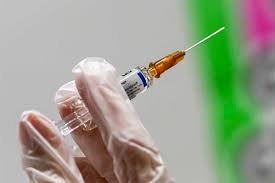
On Friday morning, the WHO will announce the recommended strains for next year’s flu shot. Manufacturers will then begin the nine-month production process.
Dr. Ali Khan, dean of public health at the University of Nebraska, describes the flu shot as “the ultimate multilateral product of a whole global system.” While reassuring that the CDC will participate in the meetings, he acknowledges a “bleeding of influence of the U.S. government in global health.”
Learn more about influenza and vaccine development: